
Rick Steves’ Europe: Europe’s animal shows and experiences


I will never forget my first “hawk walk.” It was at the Ireland School of Falconry (just outside of Cong, north of Galway), where a great guide showed our tour group how to properly handle birds of prey. For about an hour, we wandered through the enchanting grounds of Ashford Castle, with our guide sporting a Harris hawk on his forearm. After learning about falconry, each person in our group got an opportunity to “fly” the bird – tossing and catching it on his or her arm. With each toss, the glove was rotated to the next person, and the guide tucked a little chicken meat in the padded palm – and the hawk knew just where to return. The experience was both intimate and intense.
Throughout Europe, you’ll find vivid and memorable animal demonstrations and experiences. They run the gamut, from famous festivals like Pamplona's Running of the Bulls or Siena’s Palio horse race, to routine rituals like sheep shearing or hawk holding. Whether big and raucous or small and personal, I always find these experiences fascinating.
At Château de Cheverny in France’s Loire Valley, barking dogs remind visitors that the viscount, who still lives there, loves to hunt. Visitors enjoy a peek at the dogs in their kennel, a glimpse at their training regimen, and if it’s mealtime and you're lucky…the fun of seeing the dogs eat.
These days, feedings are rarely open to the public. But on the off chance they're offered, it's a memorable sight. I once saw 120 hounds – half English foxhound and half French Poitou – get worked up knowing that red meat was on the way. The trainer – who somehow knows every dog’s name — corralled them and spread out the feast. As the dogs are fed just once a day, the excitement was palpable. The trainer opened the gate and maintained discipline as the dogs, who can only eat when given the go-ahead, gathered enthusiastically around the food. It was an exercise in control…until the signal announced: it’s chow time.
In Vienna, a cultural highlight is seeing the Lipizzaner stallions perform at the magnificent Spanish Riding School. These regal white horses are a creation of Habsburg Archduke Charles, who imported Andalusian horses from Habsburg-ruled Spain and then bred them with a local line. They’re known for their noble gait and Baroque profile.
One Sunday morning, I decided to drop in on a performance. I ducked through a royal passageway and paid about $30 for a standing-room spot to see the much-loved stallions prance to Viennese classical music in the emperor’s chandeliered Baroque riding hall. While watching, it occurred to me that they prance in 4/4 time ... even though this is the city of the waltz — which is in 3/4.
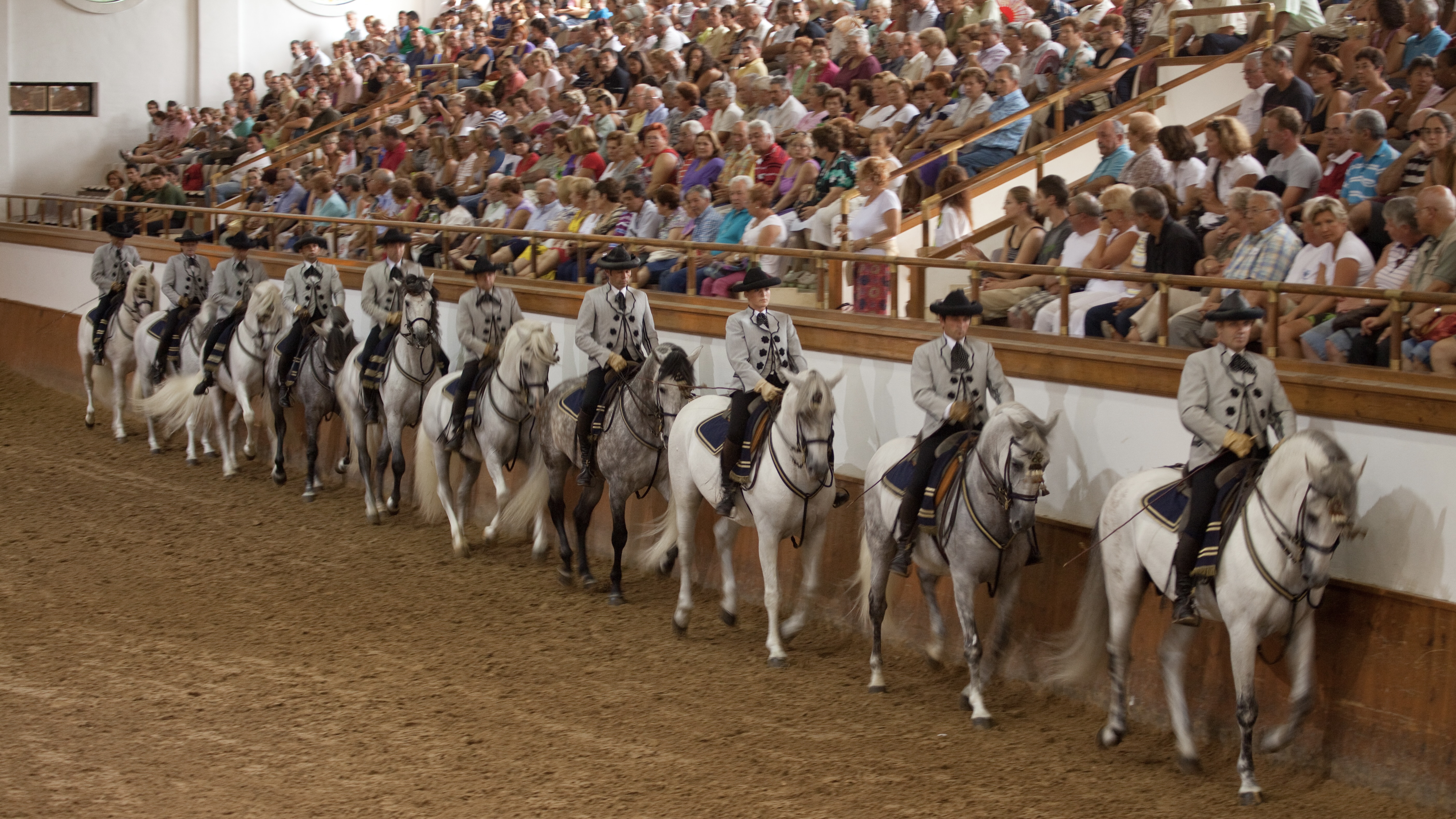
Equally impressive is the horse show at the Royal Andalusian School of Equestrian Art in Jerez, Spain. Here, horses – both purebred Spanish horses and larger mixed breeds – perform an equestrian ballet with choreography, purely Spanish music, and costumes from the 19th century. The stern riders command their talented, obedient steeds to prance, jump, hop on their hind legs, and do-si-do in time to the music.
While I appreciate the elegance and grandeur of a horse show, I also love the rustic simplicity and intimacy of a sheepdog demonstration. Two of my favorites are in Ireland and Scotland.
In Ireland, I enjoy the Kissane Sheep Farm, a 2,500-acre farm perched on a scenic slope above the Black Valley near Killarney, where John Kissane’s family has been raising sheep for five generations. Visitors get to chat with the family, learn about their livelihood, and watch highly strung sheepdogs race around according to John’s call. On my most recent visit, one of the brothers effortlessly sheared a sheep while explaining how the Irish wool industry is so bad these days, the farm survives only with the help of money generated by showing off the tradition to visiting tourists.
And at Working Sheepdogs in the Scottish Highlands, a dozen joyous border collies seem eager to show off their skills. The dogs clearly love the Shepherd, Neil, who they follow like a messiah. The last time I was there, Neil sat my group down in a natural little amphitheater in the turf to explain his work, its history, and why sheep and cows “are actually man’s best friend.” Then the dogs got to work: With shouts and whistles, each followed individual commands and showed an impressive mastery over the sheep. On this farm, it was very clear: Sheepdogs are smart – and sheep are idiots.
The best animal shows and experiences are not only interesting and educational, but also vividly real and culturally broadening. Adding one to your travel itinerary is a fun way to gain insights into generations-old traditions and a different way of life.
========
(Rick Steves (www.ricksteves.com) writes European guidebooks, hosts travel shows on public TV and radio, and organizes European tours. This column revisits some of Rick's favorite places over the past two decades. You can email Rick at rick@ricksteves.com and follow his blog on Facebook.)
©2026 Rick Steves. Distributed by Tribune Content Agency, LLC.
(c)2026 RICK STEVES DISTRIBUTED BY TRIBUNE MEDIA SERVICES, INC.








Comments