Port of Los Angeles records bustling 2025 but expects trade to fall off next year
Published in Business News
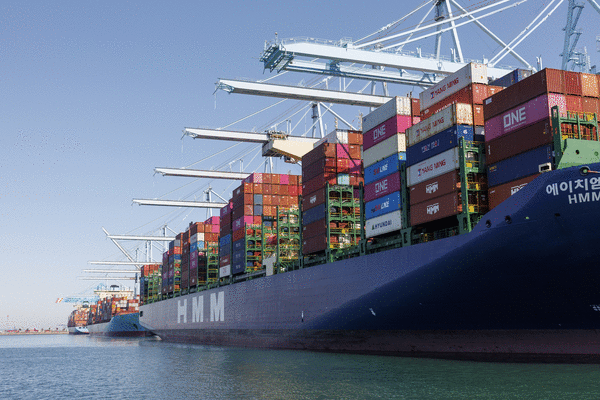
The Port of Los Angeles expects it will move than 10 million container units for the second year in a row despite President Trump's tariffs — but that number is likely to drop off in 2026 as the fallout of the administration's trade war persists.
This year's volume will reflect a decision by importers to get ahead of the tariffs before the duties took effect — with trade later slowing, according to the monthly report by the nation's largest container port.
"In a word, 2025 was a roller coaster," port Executive Director Gene Seroka said during the webcast.
In November, there was a 12% decrease in volume with about 782,000 TEUs, or 20-foot equivalent container units, processed by the port. The decrease was driven by an 11% fall in year-over-year import volume.
"Much of that difference is tied to last year's rush to build inventories and now with some warehouse levels still elevated, importers are pacing their orders a bit more carefully," Seroka said.
Still, by the end of November, the port had moved almost 9.5 million container units, 1% more than last year, leading to the expectation that volume will top 10 million for the year.
The port moved 10.3 million container units last year and set a record in 2021 when it moved 10.7 million container units.
However, exports — cargo shipments from the port — fell for the seventh time in 11 months in November, sliding 8%, which will lead to the first annual decline since 2021. Seroka blamed the drop on the response to the tariffs.
"We're also seeing the effects of retaliatory tariffs and third country trade deals on U.S. ag and manufacturing exports," Seroka said. "This is a headwind we may face for some time to come."
The port director said he expects that imports will decline in the "single digits" next year because of continued high inventory levels, but he doesn't anticipate a drastic downturn in overall trade.
"I don't see the port volume falling off a cliff, and it's a pretty good leading indicator to the U.S. economy that we should take stock in," said Seroka, who added that there is much economic uncertainty entering next year.
The question of where the economy is headed was highlighted Tuesday by the latest jobs figures, which were delayed by the government shutdown.
They showed the economy lost 105,00 jobs in October as federal workers departed after the Trump administration cuts but gained 64,000 jobs in November.
The November job gains came in higher than the 40,000 that economists had forecast, but the unemployment rate still rose to 4.6%, the highest since 2021.
Constance Hunter, chief economist at the Economist Intelligence Unit, who provided a 2026 U.S. national economic forecast for the port on Tuesday, said the jobs figures offer mixed signals.
The job gains were driven by the health and human services sector, reflecting a narrowing of where job growth is occurring. At the same time, more types of companies are adding jobs rather than subtracting them.
Hunter forecast that the economy will grow in the first half of the year, as consumers receive tax cuts called for in Trump's "One Big Beautiful Bill Act" tax-and-spending measure. However, tariffs will weigh down the economy later.
One key issue driving uncertainty, she said, is whether the U.S. Supreme Court will uphold the tariffs Trump imposed under the International Emergency Economic Powers Act.
The Trump administration announced Tuesday that the government had collected more than $200 billion in tariff revenue this year. Trump has talked about sending out $2,000 rebate checks to consumers with some of the funds.
However, a Supreme Court loss would force the government to return, by various estimates, $80 billion or more of the money to importers, putting a crimp in the president's plans for economic stimulus.
Other factors driving uncertainty, Hunter said, are the Ukraine-Russia war, U.S.-China tensions over Taiwan and the "durability of peace in the Middle East."
"All of these things are going to conspire to keep what we call the uncertainty index elevated," she said.
©2025 Los Angeles Times. Visit at latimes.com. Distributed by Tribune Content Agency, LLC.






Comments