Kalshi 'prediction market' violates WA antigambling laws, AG says
Published in Business News
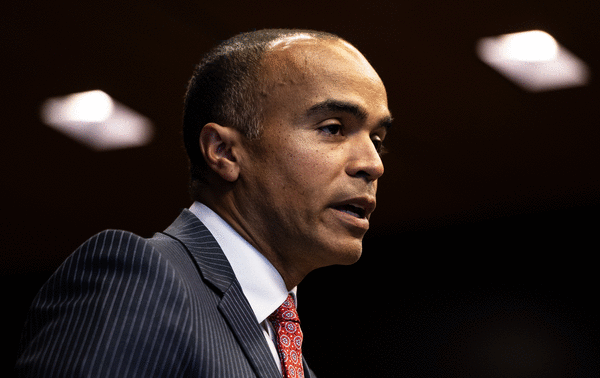
SEATTLE -- Washington Attorney General Nick Brown sued Kalshi on Friday, calling the company’s claims to be a “prediction market” little more than a front for an illegal gambling operation.
The lawsuit, filed in King County Superior Court, accuses Kalshi of violating Washington’s relatively strict antigambling laws and using the company’s own boasts to prove the point.
Kalshi has claimed to be the first site where you can “bet on the NFL in all 50 states.” It has claimed it has made it possible to “bet on everything.”
Online gambling remains illegal in Washington state, except on location at tribal casinos. Kalshi calls itself a “prediction market” that allows customers to buy a share in the likelihood of something happening.
Kalshi allows you to bet on every March Madness game, Brown noted. It allows you to wager on how many players will score 40 points or get a triple-double.
“Kalshi really is just a bookie with a fancy name, and a huge amount of venture capital behind them,” Brown said at a news conference Friday in downtown Seattle. “They publicly pat themselves on the back for being sneaky and getting around Washington’s gambling laws, but it’s worse than being sneaky. It’s a lie and it’s illegal.”
Arizona this month filed criminal charges against the company, accusing it of running an illegal gambling operation.
Kalshi’s “prediction market” goes far beyond sports in what it allows customers to lose money or profit on.
You can wager on what words Supreme Court justices will say and on the outcome of America’s war in Iran.
Before the launch of the war with Iran, Kalshi offered wagers on when Ayatollah Ali Khamenei would be out as supreme leader of Iran. It has offered wagers on how many measles cases the country will see and what witnesses would say at a hearing on child trafficking.
Brown’s lawsuit is technically about consumer protection — he is seeking to stop Kalshi from operating in Washington and to collect damages to compensate those who have lost money.
But he framed it Friday in broader terms, as part of an effort to determine “what kind of a society we want to live in.”
“Do we want everything to be gambling?” Brown asked. “Do we want to be an America that goes from worrying about the human cost of war to betting on the over/unders of that war? What else would we lose about ourselves if the whole world became a craps table?”
©2026 The Seattle Times. Visit seattletimes.com. Distributed by Tribune Content Agency, LLC.



Comments