'Still imprisoned in his mind.' Illinois exonerees struggle without support after wrongful convictions
Published in News & Features
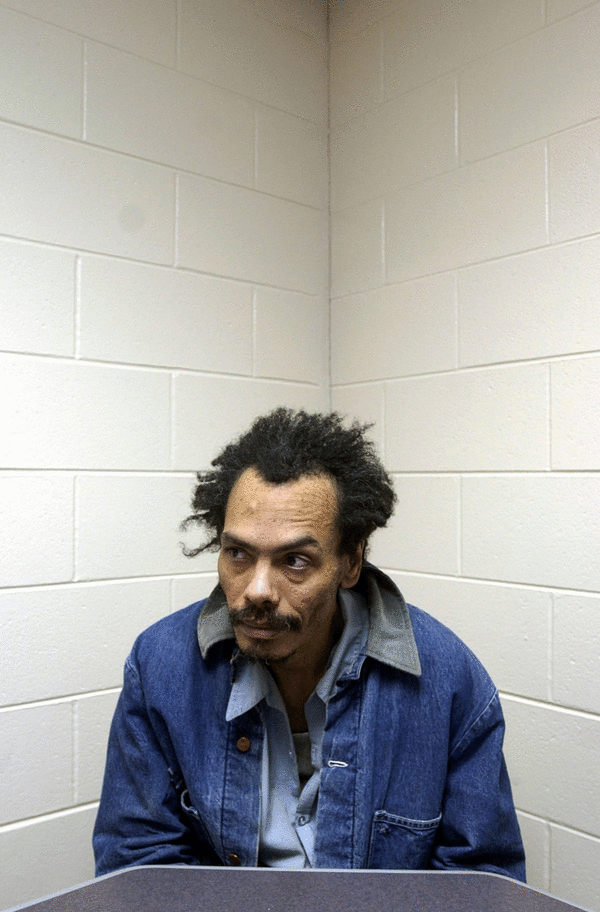
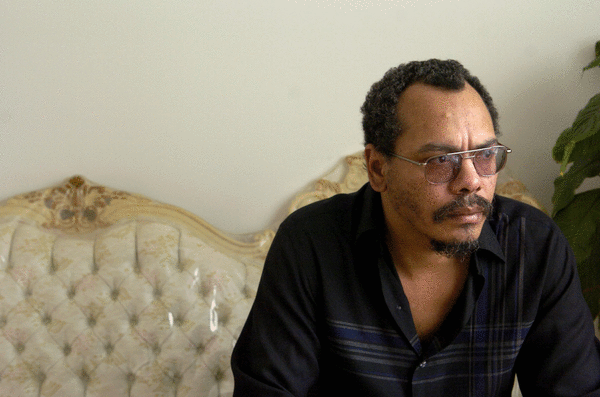
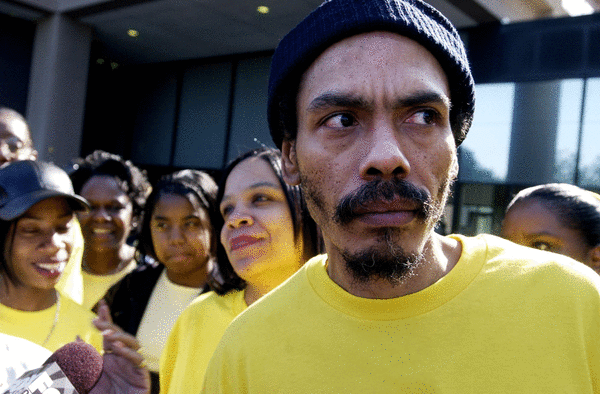




CHICAGO — Paul Terry walked out of prison more than 20 years ago after DNA evidence cleared him of a crime he was convicted of as a teenager. He was free, but the life he lost has never returned.
Now 67, Terry rarely speaks. He spends much of his time confining himself to his bedroom inside a South Side home he shares with his family, still grappling with mental health issues he developed behind bars.
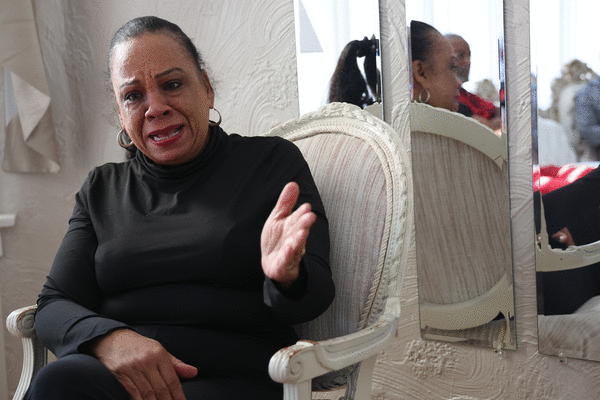
“It has been devastating to see my brother the way he is, because when he went to prison, he wasn’t like that,” said his eldest sister, Doris Johnson, 84. “His mind is still incarcerated.”
Terry’s struggle is a stark example of a problem Illinois has yet to confront meaningfully: what happens to people after the state’s judicial system admits it wrongfully took their freedom.
For the better part of a decade, Illinois led the nation in annual exonerations until it was surpassed by Texas in 2024, according to the National Registry of Exonerations. Yet Illinois offers little in terms of a comprehensive system to help exonerees recapture their lives — medically, psychologically or practically — after release.
There are post-release government resources for people exiting prison, but none tailored to the extraordinary circumstances of the exonerated — wronged by the legal system, in many cases over decades, and then suddenly put on the street with no preparation or plan for facing the outside world.
And with state compensation rates well below the national average, many are struggling, exonerees and experts said.
Terry was 17 when police first arrested him in the 1976 rape and killing of 9-year-old Lisa Cabassa. He spent more than a quarter-century behind bars before DNA evidence excluded him as a perpetrator, and he was exonerated in 2003. Today, his sisters say, their family is aging and ill-equipped to meet his needs.
Terry did receive $2.7 million in a settlement with the city of Chicago, which one of his attorneys at the time described as enough money to take care of his psychological needs for the rest of his life. But even with that money and support from his family, he hasn’t sought the psychological help his family says he desperately needs.
“You’re on your own,” said Brian Beals, who two years ago was freed from prison after being exonerated and who now works at the organization Restore Justice. “Stepping into a whole alien landscape.”
Terry appeared only briefly on a freezing day last month, when the Tribune visited him and his family in their tidy home, which he shares with his twin sister, Pamela Hawkins, and her husband. Terry’s hair was cut short — one of his remaining regular activities is visiting the barbershop, his family said. His posture was slumped and he held a cigarette.
He nodded politely but didn’t engage in conversation before heading back upstairs to his room, where he paced intermittently. He was dressed for visitors, but he had no words to greet them.
Some nights, he paces for hours, Hawkins said, and many mornings, he makes coffee in his room, as he would in prison.
Lives upended at 17
The Tribune covered Terry and his co-defendant, Michael Evans, extensively as they pursued exoneration and in the immediate aftermath.
In their case, a sole eyewitness tied the teenagers to the abduction. Lisa had been strangled and sexually assaulted.
One of the prosecutors, Thomas Breen, who later became a leading defense attorney, expressed misgivings about the case in the 1990s, prompting a reopening and reexamination.
A Tribune investigation later uncovered additional evidence suggesting Evans and Terry were wrongly convicted. The victim’s parents told the paper that crucial testimony from Lisa’s mother was changed to fit the account of the key witness, which also had been changed.
Then, in 2003, Terry and Evans were exonerated after DNA evidence excluded them from the crime. No one has since been charged with Lisa’s killing.
In 2004, a Tribune profile of Terry and Evans noted that recovery from prison had been slow. For Terry, it now appears it never really came.
That story also noted that those who are exonerated don’t even have the social services associated with parole. That hasn’t changed, either.
Evans declined to comment for this story through his sister, Ann Evans. He put it bluntly in the 2004 article when asked what he planned to tell a university conference about what happens to exonerees.
“I can tell you what happens,” he told a reporter then. “Nothing. There’s no apology and no job.”
The remark proved prescient. In 2006, a federal jury rejected Evans’ $60 million lawsuit after he opted for a trial rather than a settlement with the city, as Terry did. Evans’ total compensation for 27 years in prison was $160,000.
An uneasy exit
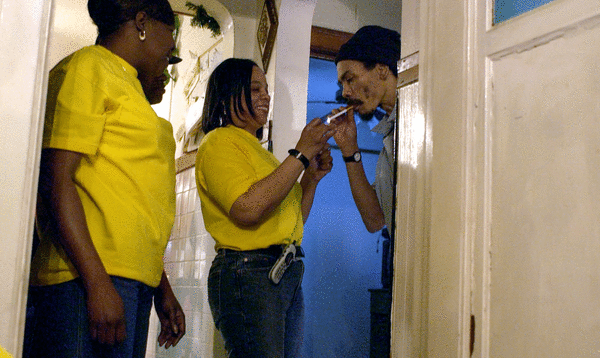
The day Terry left prison was the best of his family’s lives. His family dressed him in a yellow T-shirt to match the rest of the family, who color coordinated as a symbol of welcoming Terry back home.
That feeling faded quickly.
One of Terry’s seven sisters, Beverly Brown, had died while he was in prison, apparently from a self-inflicted gunshot wound, according to Johnson and a news report at the time, after she was suspected of killing her husband and two children.
But his family withheld the information at their mother’s request, fearing how Terry would process it inside prison. When he finally learned the truth, he said nothing. He hasn’t spoken about it since. He also hasn’t discussed his time in prison, Johnson and Hawkins said.
Johnson said she initially took Terry to support organizations for people who had been released from prison, but found there wasn’t any specific care for exonerees.
Resources available to anyone leaving prison are available to exonerees, including guides to benefits and social services for post-release life produced by the Education Justice Project at the University of Illinois, and restorative justice circles at the Precious Blood Ministry of Reconciliation on the South Side, experts said.
But some of the programming that Beals now coordinates for others returning from prison wasn’t available to him as an exoneree, he said.
For example, resources distributed to people in their last year of prison for IDs, digital literacy and job access don’t necessarily make it to exonerees, because there’s so much uncertainty about when those people will leave prison, he said.
“You miss that window,” Beals said.
In addition, Beals said, people exonerated and immediately released are effectively homeless unless family takes them in. Many also struggle with deep mistrust of institutions — and of people — after years in the system.
“In cases of immediate release, particularly when an individual’s release date is unknown, (the Illinois Department of Corrections) may not have the opportunity to assist with certain re-entry resources, including applications for Medicaid, SNAP, a State ID, or a Social Security card prior to release,” IDOC spokesperson Naomi Puzzello said in an email.
“These programs are essential in preparing individuals leaving custody,” Puzzello said. “However, in the case of exonerees, IDOC does not set the timing of release and may therefore be limited in its ability to assist.”
Reentry is core to the mission of IDOC, Puzzello said, noting that IDOC “collaborates with other state agencies to facilitate enrollment in critical post-release benefit programs.”
The Illinois Department of Human Services in a statement noted that it offers a mental health program for people leaving prison in the months immediately before and after release, as well as housing for individuals with certain behavioral health concerns.
“IDHS is committed to ensuring that individuals returning from incarceration, whether through exoneration or after completing their sentences, are supported with dignity and connected to essential resources,” a department spokesperson said.
‘The damage is done’
Jon Eldan, an attorney and executive director of the national nonprofit that works with exonerees, After Innocence, said the public “understandably assumes” anyone found to have been improperly incarcerated for decades eventually receives large payouts and moves on with their lives. But most exonerees get little or nothing, he said
Illinois’ state compensation is among the lowest of the roughly 40 states in the country that have such a program, he said, and efforts to increase it haven’t been enacted in part because it would be “massively more expensive” than in some other states.
“For us, there are just a few states that are real outliers, and one is Illinois,” Eldan said.
Legislators have introduced a bill to raise compensation for exonerees based on the number of years they were wrongly incarcerated, and it passed without opposition in the House last year but hasn’t received a vote in the Senate.
Democratic state Sen. Elgie Sims, who introduced the legislation to raise and remove a cap on state compensation for people who have been exonerated, on Friday said he’s actively working on it with advocates, the legislature and Gov. JB Pritzker’s administration. As a top budget negotiator, he’s looking at the costs and how many people could be included, he said.
“We’ve got to recognize that there are individuals who are out there who have been wrongfully convicted. We’ve got to make amends for that,” Sims said.
Successful lawsuits or settlements aren’t guaranteed either, as the bar for showing the state’s wrongdoing is high. A conviction based on a bad witness without tampering of evidence or a suggestive lineup could leave an exoneree with no one to sue, Eldan said.
Dealing with the burden of having to explain their situation to employers and others — and the challenge of financial planning for potential compensation — also poses a difficulty, he said.
The city’s $2.7 million settlement that went to Terry’s estate was supposed to take care of him. And to be sure, some years since the exoneration have been better than others, Terry’s family said. For a few years, Terry took medication from a psychiatrist and would talk more regularly with his family. He was well enough to sometimes participate in programming for people with mental health issues and go on outings downtown.
But the medication wasn’t enough to help him process what happened, his family said. Years passed, and he didn’t make progress on his mental health.
Eventually, he stopped taking it because he didn’t like how the side effects made him feel. Since then, in the past three or four years, his life receded, his family said.
Terry has his settlement money and loved ones who want to help him use it to make his life better — much more than many people who leave prison. But his family repeatedly emphasized that any amount isn’t enough, with Terry’s seemingly deep psychological issues going well beyond what they can fix.
“Money don’t touch what my brother and family is going through,” Hawkins said. “He’s been out 20-some years. And what has that money done for him? Absolutely nothing.”
Beals, of Restore Justice, noted that families are not only called upon to support their loved ones throughout their time in prison but also, when they’re reunited, must still carry the burden of helping them reacclimate to life outside.
James “Jimmy” Soto and his cousin bear the unfortunate distinction of being the longest wrongly incarcerated people in Illinois. Soto, who is now pursuing a legal career after four decades in prison, is in some ways the poster child for exonerees who can take their life back.
But he’s also a fierce advocate for changing the prison system, in part because he’s seen up close the mental damage it’s wrought on inmates.
Soto himself didn’t formally get help for his mental health until about four or five months after he left prison in December 2023, he said.
“It’s a struggle almost every day to try to fit in,” even when people think “you have it together,” he said.
Like Beals, he found no specific mental health services and said most resources are not geared to exonerees.
“It’s usually abrupt,” Soto said of the time when exonerees are released from custody. “We don’t really know, so we don’t go to the same prerelease services that the IDOC provides, which would involve seeing a mental health professional.”
Instead, when Soto was released, he said, he was handed $25 for a ride home and sent on his way.
Soto’s federal lawsuit is pending, and he’s withholding his state compensation in hopes that future legislation will increase the amount he could receive.
“It could never give us the psychological freedom,” he said. “Because we will forever be tethered to our carceral experience.”
The solutions to Terry’s exact situation aren’t clear. He has money, but his family can’t force him to use it to process his trauma. The state and nonprofits offer online packets and lists of resources, but his family said that after decades they would need more direct guidance to find a compatible therapist who has expertise in exonerees or incarceration.
“After 27 years, the damage is done,” Hawkins said, her voice sharp. “Where is the responsibility of the state?”
TV, groceries and a family in pain
While Terry sometimes seems nervous or angry, Johnson said, his family stressed that he’s still kindhearted, and in some ways warm: Even when he’s refusing the psychological care his family thinks he needs, he doesn’t lash out, they said.
Still, the family reported that his regular activities are limited to going to the grocery store, barbershop or Walmart, and occasionally cooking at home.
Recently, Terry has been watching TV, but only shows that were on before he went to prison in 1976, the ones he used to watch as a kid.
“He’s stuck there,” Hawkins said. “He’s stuck there.”
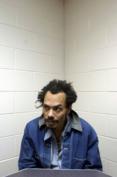
A few weeks ago, she and Terry were looking through photos when they came across one of him when he was incarcerated.
“He stopped, and he looked at the picture, and he just stared at it,” Hawkins said.
Rather than addressing it out loud, she said, he just began mumbling to himself, as he sometimes does.
Through Hawkins, Terry declined to comment for this story or be photographed at home.
As Paul’s twin, Hawkins knows what her brother’s life could have been. She can almost see it. After more than 40 minutes discussing her brother’s case, she broke down when describing what might have been lost: independence, a family of his own and a high school degree.
“I didn’t want to go there,” Hawkins said, her voice cracking. “But it still hurts me. It hurts me to see him still imprisoned in his mind. I see it every single day. I’m living with this, and it hurts. It hurts.”
©2026 Chicago Tribune. Visit at chicagotribune.com. Distributed by Tribune Content Agency, LLC.






Comments