SpaceX fleet-leading booster makes record 33rd trip to space
Published in News & Features
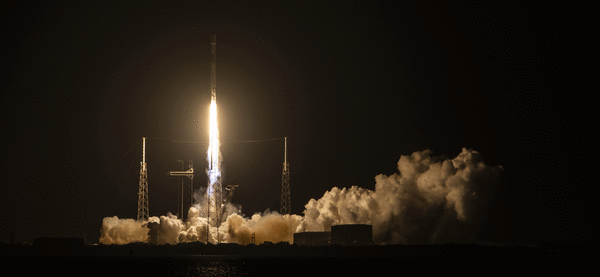
SpaceX padded the record for its most-flown rocket booster late Saturday with its 33rd trip to space.
A Falcon 9 flying 28 Starlink satellites launched from Cape Canaveral Space Force Station’s Space Launch Complex 40 at 10:47 p.m.
The first-stage booster first launched in June 2021 and has been the pace setter for SpaceX’s reusability efforts as it attempts to get it to 40 flights.
That would surpass the most-flown orbiter of the Space Shuttle Program. Space Shuttle Discovery retired after completing 39 missions.
This particular SpaceX booster has notably flown two crewed missions to space, Crew-3 and Crew-4, along with a pair of cargo resupply missions to the International Space Station, the Galileo satellite for the European Commission, several commercial satellite missions and now 21 Starlink missions.
It made a successful landing downrange on the droneship A Shortfall of Gravitas stationed in the Atlantic.
While turnaround on boosters can be as quick as nine days, SpaceX officials have said it takes much longer to refurbish one flown so many times to ensure it will be successful. This booster last flew about 2 1/2 months ago.
This marked the 12th launch on the Space Coast in 2026, which is off the record pace set in 2025 that surpassed 100 launches for the first time. By Feb. 21 a year ago, there had been 17 launches, which helped push the total from all Florida launch sites to 109 orbital missions for the year.
SpaceX has flown all but one of this year’s missions, with United Launch Alliance having sent up a lone Vulcan rocket earlier this month as well. All have been from Cape Canaveral Space Force Station with SpaceX launch from SLC-40 and ULA from SLC-41 so far.
Blue Origin, though, which flew two New Glenn missions from Canaveral’s LC-36 in 2025, is nearing the heavy-lift rocket’s third-ever mission.
The payload fairing for NG-3, set to launch the BlueBird satellite for AST SpaceMobile, arrived to the company’s integration facility at the launch complex this weekend.
When it launches, it will be reusing the booster from NG-2, which the company dubbed “Never Tell Me The Odds,” after it the company’s first successful landing of its own reusable boosters last year.
New Glenn boosters are designed to be reflown up to 25 times.
Also set to fly this year is NASA’s Space Launch System rocket on the Artemis II mission from Kennedy Space Center’s Launch Pad 39-B.
After having run through a successful wet dress rehearsal last week, NASA had announced it would target a launch as early as March 6, but then announced Saturday it was instead taking steps to roll the rocket back to the Vehicle Assembly Building because of a helium gas flow issue to the SLS upper stage. NASA Administrator Jared Isaacman later confirmed it would push back the launch to no earlier than April.
The first crewed flight of the Orion spacecraft, which looks to make a lunar fly-by with four astronauts on board, would likely be the first from KSC this year as SpaceX performs repairs on Launch Pad 39-A and continues to build out its Starship and Super Heavy launch tower adjacent to the pad.
_____
©2026 Orlando Sentinel. Visit orlandosentinel.com. Distributed by Tribune Content Agency, LLC.






Comments