Baltimore mayor's order limits ICE access, boosts immigrant protections
Published in News & Features
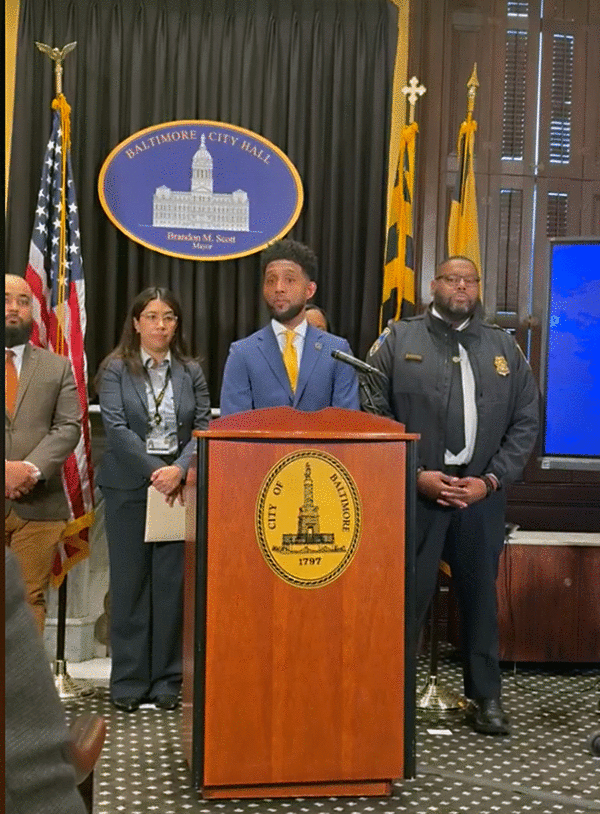
BALTIMORE — Mayor Brandon Scott signed an executive order this week aimed at shielding Baltimore residents from federal immigration enforcement while providing city-backed legal support.
The “Protecting the Rights and Well-Being of Baltimore City Residents” order bars Immigration and Customs Enforcement (ICE) agents from using city-owned buildings as staging areas or entering government offices without a judicial warrant. It also restricts Baltimore Police Department officers from asking about immigration status during routine encounters or detaining residents solely for immigration reasons.
“Our immigrant neighbors are an integral part of Baltimore’s social and economic fabric,” Scott said Wednesday, urging federal agents in the city to adopt the same transparency standards required of local police, including providing rank, name and badge numbers on request.
Scott said the order also helps maintain trust between residents and local police by keeping federal immigration enforcement separate from city law enforcement. City lawyers will provide pro bono legal services to residents involved in immigration proceedings, along with case management and support for families affected by ICE detention. More details on these services are expected later this week.
The executive order comes amid reports that ICE has been moving vehicles and supplies, including shelf-stable meals, around Maryland. Scott said the city has no information on any planned immigration actions in Baltimore.
An ICE spokesperson told The Baltimore Sun that the vehicles were a “necessary piece of equipment for onboarding officers and agents,” and the meals-ready-to-eat “are a reliable option for short-term situations.”
The agency has not directly answered whether more ICE agents will or are operating in the city, or if a spike in regional detainments will occur.
Countering a concern
Scott said much of this week’s order was meant to remind residents of “what our polices and our stances are.” But by tightening ICE’s jurisdiction and ensuring compliance on warrants, the city is also positioning itself to counter a concern that has led to lawsuits by immigration rights advocates.
Legal experts and civil rights advocates have expressed concern over ICE’s use of administrative warrants, which do not require a judge’s approval. A whistleblower memo in January suggested ICE could use such warrants to enter residences and authorize force, prompting criticism from congressional Democrats and local rights groups.
In January, a leaked memo from a whistleblower complaint suggested ICE would authorize its agents to use force and enter a residence with an administrative warrant, which comes from the U.S. Department of Homeland Security, instead of a judicial warrant, which is signed by a judge.
Civil rights leaders and congressional Democrats quickly condemned the policy as an affront to the Fourth Amendment, which prohibits unreasonable searches and seizures.
DHS, conversely, has dismissed the concerns around administrative warrants as “false narratives” by the media, stating they’re only used when an undocumented immigrant has been given a final order of removal.
Regardless of what warrant is used, locally, several business owners in Baltimore have accused ICE raids of keeping Hispanic customers inside and in fear.
Earlier this year, several months after someone was detained at a prescheduled hearing, Baltimore Sheriff Sam Cogen publicly stated that ICE agents would need a judicial warrant to enter the city’s circuit court, as well. Considering potential victims, jurors, witnesses and defendants, Cogen said the court needs to remain “neutral, safe, and accessible” for the justice system to work.
“If people stop reporting crimes or appearing in court because they fear immigration enforcement, we all become less safe,” the sheriff said.
_____
©2026 Baltimore Sun. Visit baltimoresun.com. Distributed by Tribune Content Agency, LLC.






Comments