US, Iran pursue new talks as Tehran weighs pause in Hormuz shipments
Published in News & Features
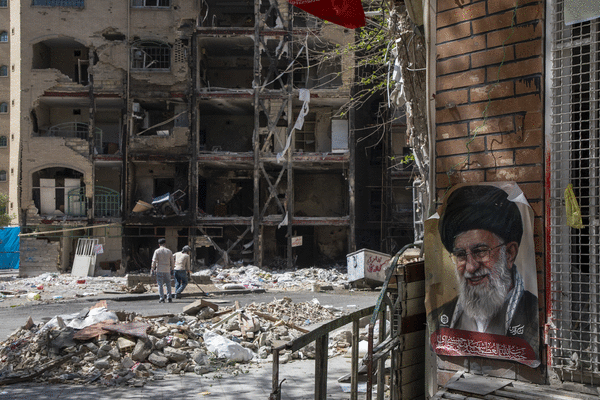
The U.S. and Iran are looking to arrange a second round of peace talks in the coming days, with Tehran mulling a pause in shipments through the Strait of Hormuz to help ease the path toward an agreement on time and place.
The objective is to hold more discussions before an April 7 ceasefire expires next week, according to people familiar with the matter. One proposal is to return to Pakistan, where initial negotiations were held last weekend, though other venues are being considered, the people said.
U.S. President Donald Trump said talks could resume “over the next two days” in Pakistan, the New York Post reported. That would build on a marathon yet inconclusive session in Islamabad on Saturday night.
In the meantime, the U.S. is pressing ahead with a naval blockade of Hormuz to curb the Islamic Republic’s oil exports, as the battle for control of the strategic waterway intensifies.
Rather than test the strength of the move, Iran may hold off sending ships through the strait in the short term, people familiar with the matter said Tuesday. That could serve to ease tensions after the six-week war has killed thousands of people and triggered a surge in energy prices.
Oil prices slumped and stocks gained on Tuesday as expectations grew that an accord may yet be struck. Brent crude traded more than 4% lower, dropping to just over $95 a barrel.
The war has damaged Gulf energy infrastructure and disrupted oil and gas supplies beyond the region, rattling markets and triggering fears of a global inflation crisis. About a fifth of the world’s oil and liquefied natural gas was shipped through Hormuz before the start of the war.
Surging prices of products such as jet fuel and gasoline are already squeezing consumers, the International Energy Agency said on Tuesday, pointing toward the first annual decline in global oil demand since 2020.
Diplomatic efforts
The latest push for talks shows the two sides haven’t given up on diplomacy despite the failure of the initial Pakistan negotiations.
Switzerland said it’s ready to provide diplomatic support to efforts to end the conflict. The traditionally neutral country hosted talks about Iran’s nuclear program before the U.S. and Israel started bombing the Islamic Republic on Feb. 28.
Fighting has largely paused since shortly after the April 7 truce was agreed, giving further cause for optimism. The exception is in Lebanon, where Israel is continuing its military campaign against Iran-backed Hezbollah.
Talks between Israel and Lebanon began in Washington on Tuesday in an effort to resolve that parallel conflict, which has killed more than 2,000 people and displaced a million more, according to the Lebanese government.
Israel’s spy chief pledged more covert efforts to try to topple Iran’s government, suggesting the countries’ conflict will continue even if the U.S. agrees to a peace deal. “Our mission has yet to be completed,” David Barnea, the head of Mossad, said in a speech.
Trump’s restrictions on Hormuz represent a further test of the ceasefire’s durability. The U.S. said six merchant vessels complied with instructions to turn around and re-enter an Iranian port during the first day of its blockade.
“We can’t let a country blackmail or extort the world,” Trump said Monday, warning Iran against charging fees for vessels to transit the strait.
A ship under U.S. sanctions and linked to China sailed out of Hormuz and into the Gulf of Oman, testing the blockade. It wasn’t clear if the Rich Starry, a medium-range tanker, visited Iranian ports before its transit.
Blocking shipments through the strait poses risks for China, which remains Iran’s largest oil customer and a key trade partner. Beijing has called for an immediate ceasefire, warning that a blockade threatens global trade.
Trump has said the Pakistan negotiations failed due to Iran’s insistence on maintaining a nuclear program and stressed that any deal would require Tehran to abandon its atomic ambitions. Israel Defense Minister Israel Katz echoed that position on Tuesday, saying the removal of Iran’s enriched uranium is a prerequisite for ending the campaign.
The New York Times, citing people familiar with the talks, reported that the U.S. proposed a 20-year suspension of nuclear activity, while Iran countered with a plan to halt it for as many as five years — similar to an offer made in February.
Iran blamed the collapse of talks over the weekend on the U.S., but left the door open for more negotiations. President Masoud Pezeshkian said Iran was prepared to continue discussions within a framework of international law, according to a statement on a government news portal.
Trump had warned shortly after the deadline passed that the U.S. would target Iranian ships using the same tactics it did against alleged drug-running boats in the Caribbean Sea in recent months.
“What we have not hit are their small number of, what they call, ‘fast attack ships,’ because we did not consider them much of a threat. Warning: If any of these ships come anywhere close to our BLOCKADE, they will be immediately ELIMINATED,” he said in a social-media post.
Still, Trump looked to downplay concerns around a potential additional shock to global energy markets, claiming in a separate post that 34 ships had transited the strait on Sunday. Bloomberg reported earlier that 19 vessels passed through the waterway in either direction on Sunday.
The U.S. has warned it will intercept or divert vessels leaving Iran, while allowing neutral ships to pass, though they may be searched for contraband. The blockade will be enforced against vessels entering or departing Iranian ports, U.S. Central Command said.
_____
With assistance from Alisa Odenheimer, Dan Williams, Courtney McBride and Dana Khraiche.
_____
©2026 Bloomberg L.P. Visit bloomberg.com. Distributed by Tribune Content Agency, LLC.






Comments