Mexico redirects commercial truck border traffic to future Otay Mesa East facilities
Published in News & Features
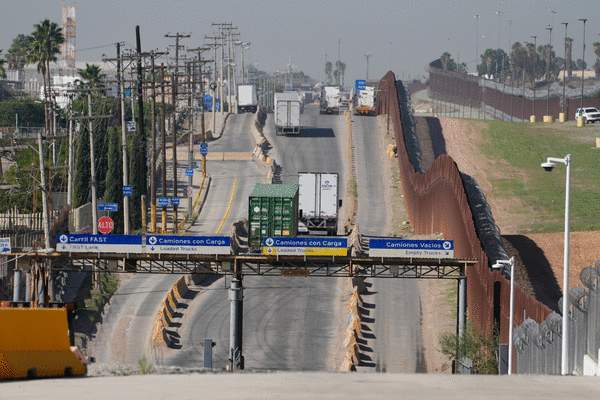
SAN DIEGO — Mexico has found a temporary use for a new customs facility in Tijuana that was built as part of the future Otay Mesa East Port of Entry project while the U.S. finishes construction on its side of the border in San Diego.
On Monday, the facility began serving as the access point for certain commercial cargo trucks waiting to cross the U.S.-Mexico border. The change was made to ease traffic in the nearby Mesa de Otay industrial area in Tijuana, as lines can sometimes stretch far during busy times.
“We have a great facility,” said Alfonso Millán with the Baja California chapter of the National Chamber of Freight Transportation, or Canacar, speaking about the new infrastructure built by the Mexican military in Tijuana. “Let’s take advantage of it.”
Millán said the idea stemmed from year-long conversations between federal and state officials, as well as groups such as Canacar.
“This will benefit the public by reducing the number of trucks that used to line up along Bellas Artes Boulevard. They will now be rerouted to this area,” Millán said. He estimated that an average of 3,000 commercial cargo trucks cross the border from Tijuana to San Diego daily.
Trucks must enter through one of the two bridges built for the future Otay Mesa East port of entry — one for traffic coming from the west and the other from the east. The trucks then proceed through the newly constructed customs facilities to access a ramp connecting to the existing commercial border crossing.
Baja California Secretary of the Economy Kurt Honold said redirecting trucks to a designated area instead of onto busy streets alongside regular traffic would also improve safety for drivers.
Alejandra Mier y Terán, executive director of the Otay Mesa Chamber of Commerce, called rerouting “a great idea” and said she hopes authorities will keep track of border wait times to ensure efficiency.
The $1.3 billion Otay Mesa East project has faced several delays over the years and is now expected to open in 2028. Construction on the San Diego side is still underway, following several key agreements reached last year between the two countries. Mexican officials had previously estimated their investment at $356 million.
The long-awaited port of entry is planned for passenger vehicles and commercial trucks, which will pay tolls for faster border crossings. The revenue will be split between the U.S. and Mexico.
In the meantime, while the project is completed, Baja California has built a couple of ramps to link the yet-to-be-operational Mexican customs facility to the commercial cargo lane running parallel to the U.S.-Mexico border fence in the Otay Mesa area.
The new access route will initially be available only for the empty truck lane, followed by the regular loaded truck lanes on Oct. 30. Hours of operation are Monday through Friday from 6 a.m. to midnight, and Saturday and Sunday from 6 a.m. to 2 p.m. and 9 p.m. to midnight, according to a social media post by Baja California Gov. Marina del Pilar Ávila.
Members of the FAST Lane Trusted Traveler Program will continue to use the existing route.
©2026 The San Diego Union-Tribune. Visit sandiegouniontribune.com. Distributed by Tribune Content Agency, LLC.






Comments