US pulls diplomats from Saudi as Houthi and Iran tensions worsen
Published in News & Features
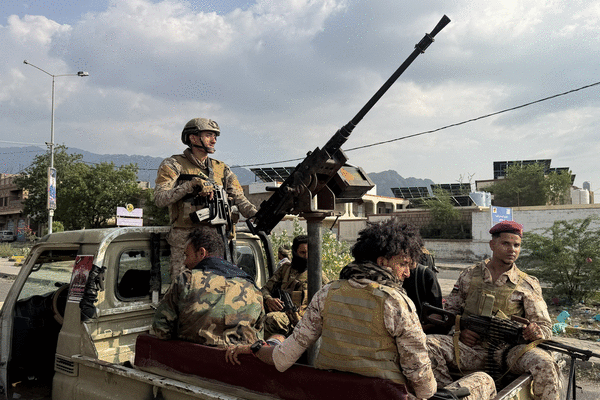
The U.S. ordered the departure of some diplomats and their families from Saudi Arabia due to the threat from Houthi militants, after the Iran-backed group carried out deadly strikes from Yemen.
Saudi Aramco’s headquarters in Dhahran was evacuated on Thursday following an alarm whose trigger remained unknown, according to people familiar with the matter. Staff have been asked to work from home, but it was unclear for how long, they added. Saudi Aramco didn’t immediately respond to requests for comment.
At least four people were killed the day prior as a result of attacks on one of the company’s oil sites and an eastern airport.
The moves follows an escalation in tensions across the Middle East, with the New York Times reporting that the U.S. and Israel are drawing up plans for renewed strikes on the Islamic Republic, which said it struck more tankers going through the Strait of Hormuz. NBC News reported that the pullout of American personnel went beyond Saudi Arabia, with some military employees set to be removed from bases in Jordan, Kuwait and Qatar.
Oil and natural gas prices have risen further in the past two days, with Brent crude up 3% on Thursday to just under $112 a barrel, its highest level in five months.
“Iranian-supported Houthis have increasingly engaged in hostilities against Saudi Arabia, including attacks on civilian airports and other critical infrastructure resulting in civilian casualties and severe travel disruptions,” State Department spokesman Tommy Pigott said on Wednesday. “The safety and security of department personnel and their families remain our highest priority.”
A drone attack on Aramco’s Shaybah oil field killed two people from Nepal and the Philippines early Wednesday, the Saudi Energy Ministry said, adding that the fatalities were caused by falling debris from a successful interception.
Operations at the field, which has the capacity to produce 1 million barrels of crude a day, were unaffected.
Two people were killed and several others were injured in an attack on King Fahd International Airport in the eastern Saudi city of Dammam later in the day, the General Authority of Civil Aviation said.
“We regularly move U.S. service members and assets to optimize mission readiness,” a spokesman for Central Command, which oversees U.S. forces in the Middle East, said when asked about the NBC report. “We do not discuss related movements for operational security reasons.”
The Houthis, a Yemen-based group that’s part of Iran’s so-called axis of resistance, have stepped up attacks on Saudi Arabia since early September. That’s led the kingdom to close many airports and cancel several investment conferences and entertainment events.
The Houthis, designated as terrorists by the U.S. and European Union, control Yemen’s capital and territory holding around 70% of the country’s population. The Saudi government tried to oust them through a bombing campaign and support for other Yemeni armed forces from 2015 until a truce in 2022. That fell apart earlier this year when the Houthis accused the kingdom of blockading their ports and airports.
Beyond attacks on Saudi Arabia, the group has expanded its control along Yemen’s western coast in recent months, posing a greater threat to shipping through the Bab el-Mandeb Strait, another chokepoint for global trade.
President Donald Trump has so far resisted pressure to support the Saudis’ operations against the Houthis beyond providing intelligence. The U.K. and France have sent defensive military equipment, with the former this week saying it would deploy jets to help shoot down Houthi projectiles.
Iran-US tensions
Iranian officials have said they expect the U.S. to attack again and have warned they will retaliate fiercely. In the event of renewed attacks against its officials and civilians, Tehran will consider a “list of U.S. political targets and war participants” as “legitimate targets,” the semi-official Fars news agency reported on Thursday, citing an unidentified senior security official.
The two sides agreed to a pause in hostilities in June that broke down after about two weeks. Since then, talks via Qatar and Pakistan, the main mediators, have failed to make much progress. Iran has continued to strike ships near or around the Strait of Hormuz and Trump has threatened to renew full-on strikes against the Islamic Republic.
The Islamic Revolutionary Guard Corps threatened U.S. bases in the Middle East should Washington continues to “encourage” vessels to transit Hormuz using routes Tehran deems “illegal,” the semi-official Fars news agency said on Thursday.
Israel, which launched the war on Feb. 28 alongside the U.S., has stepped up its rhetoric too, with Prime Minister Benjamin Netanyahu this week saying: “We must complete the elimination of the Iranian regime.”
Iran says the U.S. must lift a naval blockade and show it’s serious about reaching a diplomatic end to the conflict before serious peace talks can start.
On Thursday, the IRGC struck four “violating” tankers that were transferring oil in the northern Persian Gulf, Press TV reported, without elaborating on the dates of those attacks. The U.K. Maritime Trade Operations, an organization linked to the British navy, said a tanker was struck by a projectile southeast of Al Faw, Iraq, on Tuesday.
Despite the increasing frequency of Iranian attacks on merchant ships around Hormuz, oil flows from the Middle East show little sign of buckling.
—With assistance from Patrick Sykes and Dan Williams.
©2026 Bloomberg L.P. Visit bloomberg.com. Distributed by Tribune Content Agency, LLC.






Comments