Orange County coast is losing battle against El Niño flooding, and it's about to get worse
Published in News & Features
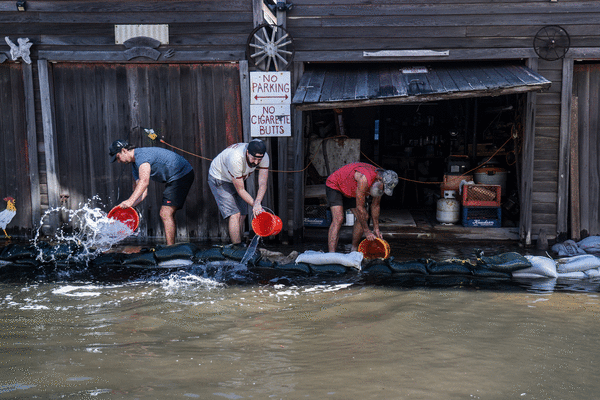

SUNSET BEACH, Calif. — Diane Copley-Botica stacked rows of sandbags and tarps around her home in Sunset Beach, hoping it might be enough to keep the rising water at bay.
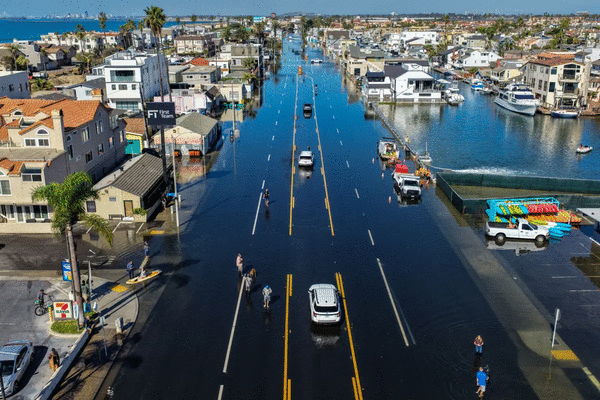
But the seawater from record high tides came anyway, flowing across the neighborhood like a river, flooding homes and businesses along the stretch of Pacific Coast Highway.
Each day this week, neighbors tried a new strategy to buttress their homes from the rising tide. But it’s never enough.
“All you can do is sit and wait and watch the water,” she said. “No one has been able to figure out how to stop it.”
The flooding this week has hit several Orange County coastal towns, but experts say it is likely just a preview of more intense problems to come this winter as a major El Niño is expected to bring heavy rain, high surf and flooding.
Cities have developed an arsenal of weapons against the tides: sandbags, water pumps, sand berms and drainage canals. Although the tools have shown some success, they have not be able to stop high tides from causing flooding. Pumps are pushing floodwater back into local bays, but it’s a slow process that only works when high tides start receding.
“They’re pumping it right back to where it’s coming from,” Copley-Botica said. “I mean where do you even put it? Nothing is working.”
During the peak of El Niño, maximum water heights during king tides could be 1 to 2 feet higher than this week, scientists warn. And if big rainstorms emerge during those events, the coastal flooding risk could be catastrophic.
“If you imagine the amount of water that we saw this week, and then you add a foot to that ... plus a low-pressure weather system, that’s going to be devastating for a lot of people who have never seen that much water,” said Kristina Hill, a professor of landscape architecture, environmental planning and urban design at UC Berkeley.
Scientists say this marine heat wave has caused seawater levels to rise 1.25 to 1.8 feet higher than they would be just from the movement of the moon, Earth and sun. Even higher tides — the so-called king tides that occur in California each year — are expected around the Thanksgiving, Christmas and Martin Luther King Jr. Day holidays.
Coastal communities up and down California have been inundated with seawater this week with high tides in record-breaking territory, elevated by an El Niño-fueled Kelvin wave that brings warmer water from the equatorial Pacific Ocean to the coast of the Americas, and a months-old marine heat wave.
To combat flooding in Newport Beach and Sunset Beach, city officials built large sand berms along the beaches to block high surf and prevent water from spilling onto low-lying streets. The water, however, just spilled over seawalls on the harbor side instead.
Public works crews deployed emergency water pumps to siphon accumulated seawater back into Newport and Huntington harbors. But in Sunset Beach, Copley-Botica said those pumps couldn’t keep up with the amount of water that flowed into neighborhoods. Some of her neighbors tried to fight back against the water with brooms, but that too proved to be a futile effort.
In Laguna Beach, businesses in flood-prone areas such as downtown use floodgates in front of their doors during high tides and storms to keep water out. The floodgates are effective, particularly during short-term rain events, but a heavy storm paired with king tides could push that infrastructure to its limit.
“A combination of high tides, a storm and the water just having no place to go would be the worst case,” said Laguna Beach City Manager Dave Kiff.
In Newport Beach, the city operates 86 tidal valves that sit at the end of storm drain pipes along Balboa Island and the Balboa Peninsula. When the tide rises and the water level in the bay exceeds the street level, crews shut the valves to block saltwater from rushing backward up the pipes and onto the streets.
Once the tide recedes, they open the valves to let the accumulated water drain out into the bay. If a rainstorm occurs during high tides, when the valves have to remain shut, it’s up to the large pump trucks to siphon water from the street.
This week, stacks of sandbags were piled onto Newport Beach’s miles-long network of seawalls around Balboa Island and the Balboa Peninsula, an effort to give the historic walls just a bit more height against the rising tide. The sandbags aren’t waterproof, but officials hoped they would slow the flow of water from the harbor into surrounding neighborhoods.
Officials for years have discussed raising the height of the seawalls, many of which were built in the early to mid-1900s to protect coastal property from rising ocean levels. A significant portion of seawalls are on private property, meaning homeowners would be responsible — and foot the bill — for capping projects.
There’s also limited appetite to block the view of harbor-front homes.
“You could keep saying we’re just going to put another foot on the seawalls and then put another foot on the seawalls and pretty soon you’re living behind a big wall,” said Kiff, who worked as Newport Beach’s city manager for years.
The city has been upgrading segments of the seawalls over the years, but much of its harbor-front property remains under threat. Hall said seawalls, like many of the other measures cities employ to deal with flooding, are a temporary fix to an evolving problem.
“I think we’re living right now through the fill-the-cracks-in-the-bathtub phase,” Hill said. “And at some point it’s going to be real obvious that that’s not enough.”
This winter is expected to be a window into California’s future of rising sea levels.
Ocean temperatures off the California coast are at record-high levels, and a hot ocean is a major contributor to rising sea levels since water expands as it heats up.
California has never before seen these types of temperatures on the sea surface in the modern record for this time of year. On Wednesday, the sea surface temperature at the Ellen Browning Scripps Memorial Pier in La Jolla was 73.6 degrees — an astonishing 9 degrees higher than the average for Oct. 28, which is 64.6 degrees. Wednesday’s temperature was the highest for an Oct. 28 in the record books, which go back to 1916.
Seawater levels broke all-time records this week, hitting 8.52 feet on Tuesday in San Diego Harbor and 8.19 feet in Los Angeles Harbor in San Pedro.
“It’s extraordinary that we’ve now beaten those levels without a king tide this week in Southern California, and in Northern California we’re pretty much running as high as we ever have been, including record-breaking October tides,” said Daniel Swain, a UC Agriculture and Natural Resources climate scientist.
Scientists have warned that the sea level could rise between 0.8 feet and 1.2 feet by 2050. By the 2030s, Californians are likely to see an increase in the frequency of coastal flooding between predicted sea level rise and the increase in coastal storms, according to California’s climate change assessment.
A report published by the Public Policy Institute of California in 2024 estimated that such sea level rise could inundate billions of dollars’ worth of buildings in the state and will necessitate a “major reworking of coastal sewage infrastructure and wastewater treatment plants, which are often found at very low elevations.”
Hill of UC Berkeley has pushed for California developers to start doing pilot projects that are similar to the floating homes being built in Amsterdam and elsewhere that can rise with floodwaters or the ocean.
“We’re in the last relatively stable 20 to 30 years of a 10,000-year relatively stable sea level rise period. Everything’s going to accelerate around 2050, so I would be doing pilot projects now to try to figure out what works, not just filling cracks in the bathtub,” she said.
“Because in 20 years that won’t be enough.”
©2026 Los Angeles Times. Visit at latimes.com. Distributed by Tribune Content Agency, LLC.






Comments