California's first sea turtle eggs could hatch any day now. Biologists prepare for the 'frenzy'
Published in News & Features

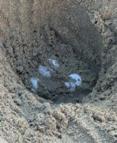
LONG BEACH, Calif. — For the first sea turtle eggs ever laid on California beaches, hatching day — hopefully — draws near.
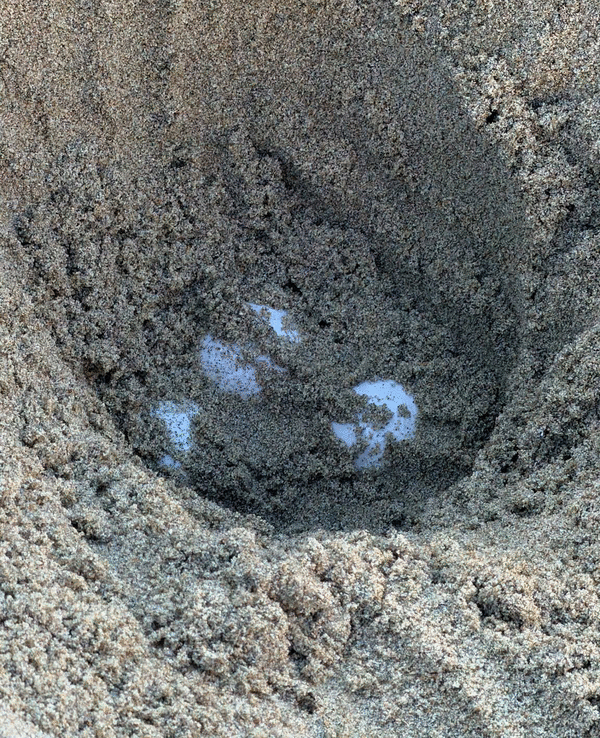
At the Aquarium of the Pacific, 204 olive ridley eggs lay packed between layers of sand in the same styrofoam coolers scientists used to transport them to the Long Beach facility in late September — just days before high tides inundated their Orange County nesting sites.
Wireless sensors and cameras monitor conditions within the coolers to ensure their contents remain around 85 to 86 degrees. Aquarium staff check on the makeshift nursery three to four times a day, but will soon increase those visits to every other hour.
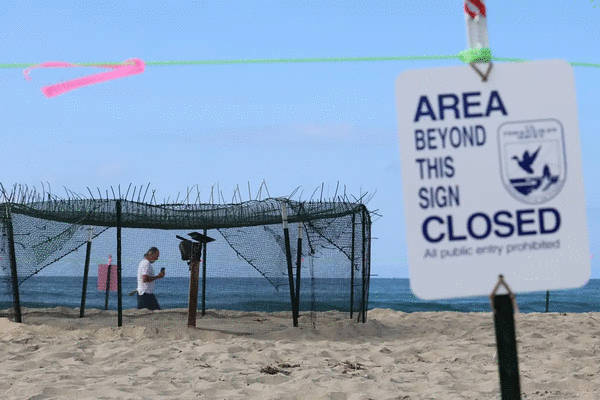
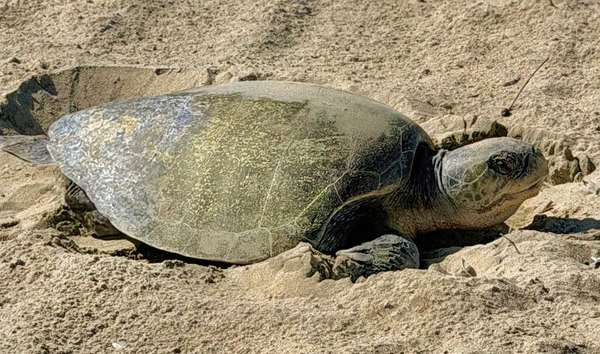
On Saturday, it will be 45 days since an olive ridley sea turtle crawled out of the surf and deposited a clutch of eggs near the Surfside community in Seal Beach. Three days later, on Sept. 19, a second olive ridley laid eggs eight miles south on Huntington Beach.
The species typically has a 45 to 60 day incubation period. While no one is certain whether the eggs are developing normally — or even if they are fertilized — their hatching would be a first for the nation’s West Coast.
Federal biologists made a last-minute decision to relocate the eggs to the aquarium on Sept. 29, after forecasters predicted that high tides would swamp the nests.
Since then, the aquarium has done its best to minimize disruptions and emulate natural conditions for two clutches whose journey thus far has been anything but routine.
“If those eggs were developing, it should be continuing,” said Dr. Lance Adams, the aquarium’s director of veterinary services.
The eggs’ appearance came as a surprise to beachgoers and biologists alike. Olive ridleys are normally found throughout tropical regions of the Pacific, Indian and Atlantic oceans, with large nesting populations in Mexico, Nicaragua, Costa Rica and Panama. Before September, the farthest known northern nest was approximately 700 miles south of Orange County in the Mexican state of Baja California Sur.
But an extreme marine heat wave and a strong El Niño have pushed southern California water temperatures closer to those of the turtles’ typical nesting grounds.
Ocean temperatures above 68 degrees are ideal for olive ridley hatchlings, a spokesperson for the U.S. Fish and Wildlife Service said.
While average late November water temperatures in southern California are historically 5 to 7 degrees lower than that, the U.S. National Oceanic and Atmospheric Administration expects ocean temperatures at hatch time to be just right for newborn turtles. (NOAA has responsibility for U.S. sea turtles in the water, while the Fish and Wildlife Service oversees those on land.)
Sand temperature also plays a major role in sea turtle development. It influences the sex balance of a clutch of eggs: cooler than average temperatures result primarily in males, warmer than average in females, and normal temperatures in a clutch roughly split between the two.
It also drives the length of the incubation period: the warmer the sand, the sooner the eggs typically hatch. While the aquarium has worked to keep the eggs in their ideal temperature zone, no one is sure what role those first weeks on the sand in Orange County will play, Adams said.
Once cameras inside the coolers show that sand above the eggs is beginning to settle — a sign that hatching has started — they’ll be kept in a dark location until evening. This is to ensure the hatchlings have enough energy for their release, Adams said.
After chipping their way through their shells, sea turtle hatchlings in the wild typically remain clustered together beneath the sand until nighttime, when temperatures and predation risk drop.
Newly hatched turtles then burst from the sand together and shuffle furiously to the sea, guided by moonlight reflecting off the water and fueled by a temporary external yolk sac.
They “go into what’s called a frenzy burst of energy, or frenzy swimming, where they just go, go, go, go, go and don’t stop. That helps them swim continuously out to the pelagic [open ocean] areas where they’re going to live for the next little bit of time,” Adams said. “But we don’t want them to expend that energy while they’re waiting for it to be dark.”
Federal biologists will be monitoring surf conditions and currents at beaches near the aquarium. Once the turtles are ready, they’ll choose the site best suited for survival, according to Adams and the Fish and Wildlife Service. The hatchlings will be placed on the sand, where they will crawl to the sea.
Life for a little turtle gets a lot more perilous from there. Less than 1% of hatchlings survive to adulthood. Females who do endure often return to the same general area where they hatched to lay eggs of their own.
To reduce the risk of disorienting light, sound and crowds, the release won’t be publicly announced in advance. Survival is a long shot for any hatchling. But experts are hopeful that at least some of California’s first sea turtles will go the distance — and possibly return.
“What do I think will be the likely outcome based on my experience?” wrote Pamela Plotkin, a retired oceanography professor at Texas A&M University, in an email. “I think that 85-95% of the eggs will hatch . . . and a few will survive to adulthood and return to nest on a California beach in 10-15 years.”
©2026 Los Angeles Times. Visit at latimes.com. Distributed by Tribune Content Agency, LLC.






Comments