CT families struggle under crushing costs. 'You are always coming up short'
Published in News & Features
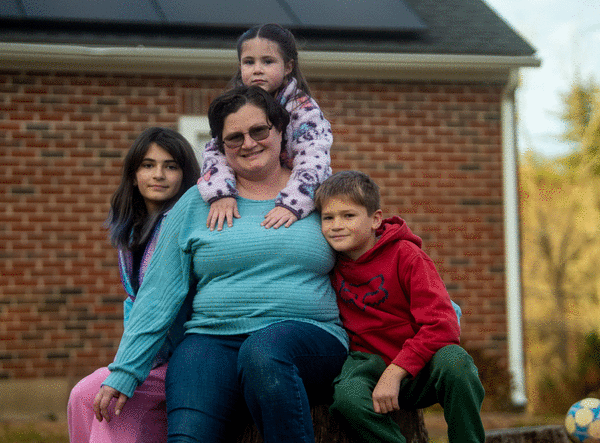
Marielle Smith never thought she would have to sell her car.
The 42-year old Tariffville resident made the tough decision this year as she and her husband struggled to make ends meet with increased gas and food prices.
“I sold the car because I can’t be this stressed every month,” Smith said.
Both work full time. She works at an Amazon warehouse and her husband is an Uber driver. With fuel essential to her husband’s profession, the high prices at the pump are cutting into her husband’s profits, she said.
Living with one car to care for the couple’s needs and their two children would not be the last sacrifice the family would have to make to sustain their living.
The weekend outings to the aquariums, the roller rink and the science centers were no longer feasible, costing at least $100 a visit. The children no longer participate in after-school activities, such as flag football, as one car presents a challenge, with the 22-mile drive round trip from the children’s magnet school in Hartford to the family home.
“My husband works seven days a week,” she said. “I have a full-time job. I am going to school. But it just feels like you are always coming up short.”
The state of Connecticut has one of the highest property tax burdens in the nation and among the highest costs for energy and housing. Between expected double-digit health insurance premium hikes and increases in electricity and heating costs, family budgets are strapped.
The U.S. war with Iran, inflation and tariffs, have also exacerbated costs for families in the state, making it particularly hard for them to sustain a living, economic experts said.
“I don’t see any short-term relief coming,” said Mohammad Elahee, professor of international business at Quinnipiac University. “I think we will continue to suffer from this myriad of crises. It’s a confluence of factors that are causing multiple crises. I think the high inflation will continue for another five to six months at least.”
Sen. Chris Murphy said in an email that “American workers are more productive than ever, but their wages haven’t reflected that, even as the cost of living skyrockets.
“If you work full-time in America, you should be able to afford your basic needs,” he said.
In June, Murphy introduced legislation to raise the minimum hourly wage to $25.
“It’s time to build an economy that works for working people, not just wealthy elites,” he said.
State Comptroller Sean Scanlon said addressing the property tax structure is the “biggest issue” that the state needs to tackle. More than half of education funding comes from local property tax dollars and municipalities also heavily rely on the revenue for many of its functions. The property tax is the only tax cities and towns can levy.
Requests for food increased 80%
Several families the Courant spoke to in the state said that the myriad of rising costs are impossible to absorb and stress levels are also climbing, as some take on second jobs to make ends meet.
Mioara Kirychuk said she and her husband struggle with the costs of daycare for their three children. The couple’s income disqualifies them from childcare aid programs such as Care 4 Kids because they make slightly more than the program’s maximum allowed income. Every month, the couple absorbs $1,700 in daycare costs.
“I go to the food pantry to help with groceries,” Kirychuk said. “The childcare cost has made it very difficult for any family with a two-income household. It just seems that the middle class used to be able to afford the basics and now the middle class can’t even afford that. It’s no longer now we can save for our kids’ college or our own future. That’s not even on the table anymore. We did not go on vacation. We don’t have those luxuries of being able to do anything.”
Kirychuk said she Door Dashes over the weekend to provide more income for the family.
The latest United Way Connecticut research report shows that 570,000 households — 39% of all households — are below the ALICE Threshold, meaning their income does not cover the basic cost of living where they live. That’s 14% higher than in 2019. ALICE is an acronym that stands for Asset Limited, Income Constrained, and Employed.
Fred Carstensen, professor of finance and economics and director of the Connecticut Center For Economic Analysis at the University of Connecticut, said the percentage of households below the ALICE Threshold has not dropped over the years. And he said this correlates with a lack of quality jobs in the state and wages declining.
“The data says the quality of jobs in Connecticut has been systematically declining,” he said. “We have systematically lost jobs across all our major sectors: insurance, business services and manufacturing. Even in the highest paying sectors, we have the lowest paying jobs.”
The number of requests for food, transportation and clothing skyrocketed in the last year, according to statistics from 211.
Food assistance increased 80%, clothing requests saw an increase of 156%, and transportation assistance increased 103% since last year, according to 211 statistics.
Daniel Fitzmaurice, director of advocacy for the United Way, said families are forced to make “impossible choices all the time.”
He said he hears from families about tough decisions, such as charging basic groceries on a credit card that is already nearly tapped out, or choosing not to go to the doctor because of concerns about out of pocket costs such as prescription drugs.
“They’re already driving Uber Eats on the weekends to try to make some extra money,” he said.
He said increased food prices, including on canned and frozen goods, are making things harder for families.
Fitzmaurice said 211 continues to have high requests for housing, mental health services and food.
People living in cities such as Waterbury, Bridgeport, New Haven and Hartford, are struggling most, with upwards of 70% of people living paycheck to paycheck.
Waterbury Mayor Paul Pernerewski Jr. said there are simply not enough housing options for residents.
“What’s driving some of the homelessness is that there’s just not the housing available to people at the bottom end of the income stream to be able to afford rent,” he said.
Hartford City Councilman Josh Michtom said he often hears from residents who struggle to pay rent and afford property taxes.
“Although our property values are so low, our percentage of property taxes are very high,” he said. “So, you have no effective redistribution of wealth for the funding of services.”
In watching the trend line in cities and suburbs over the years, Fitzmaurice said he noticed a “pronounced shift,” with rural and suburban communities also feeling the pinch.
He said fuel assistance programs were becoming depleted faster each year in some of those communities.
While the U.S. economy is holding steady, Elahee said the issue is affordability for many families.
Gas prices have gone up over 30% and heating costs are up at least 21%.
The increased gas and heating costs are connected to the conflicts in Iran and Ukraine, Elahee said.
“I think an important issue is policy uncertainty because in the USA right now there have been many abrupt changes in our economic and trade policies,” he said.
And the cost of labor has also risen due to the deportation of immigrants from agricultural farms and other immigrants now being afraid to work, Elahee said.
Remedies
Scanlon said that the state is proactively making changes to help people make ends meet and that more changes are expected.
Scanlon said between the summer of 2025 and 2026, the state had the sixth fastest growing economy.
“We were in a fiscal crisis for a long time and now that we are finally out of that, we are in the position to do the kinds of things we’ve done in the last few years to lower people’s costs,” he said.
Officials recently enacted the largest income tax cut in history, exempted social security for most seniors for taxation and will make childcare free for everyone that makes under $100,000 beginning in July 2027, due to the early childcare endowment.
Addressing the property tax structure is a priority issue, according to Scanlon. He said he sponsored and organized The Connecticut Citizens’ Assembly on Property Taxes, which the Connecticut Mirror reported is calling on the state to impose a surcharge on millionaires’ earnings and interstate highway tolls to help bring billions of dollars in local property tax relief.
House Republican leader Vincent Candelora of North Branford said the state relies too heavily on funding education out of real property taxes.
The biggest burden he hears about from constituents is high property taxes.
“The first thing we have to do is fund education at a higher level at the state level,” he said. “We should be increasing education funding to keep up with inflation. I think we have to be smarter with our energy policies.”
Kirychuk said property taxes are a major issue in her household.
Prior to buying their own home, Kirychuk said the family lived in an apartment where the landlord was doubling the rent. To avoid that cost they moved to a house and then were saddled with higher property taxes. Now they are struggling to afford the taxes.
_____
©2026 Hartford Courant. Visit courant.com. Distributed by Tribune Content Agency, LLC.






Comments