Trump says strikes unlikely as Rubio slams Iran's demands
Published in News & Features
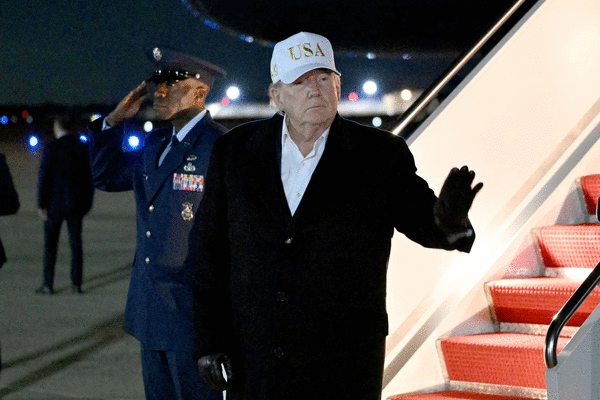
U.S. President Donald Trump struck a more conciliatory tone about Iran over the weekend, saying it’s “highly unlikely” he will order extensive strikes on the Islamic Republic.
Still, that depends on Iran signing “a very strong agreement,” he told CNN on Sunday, underscoring how high tensions remain. His comments came shortly before Iranian media said the U.S. launched limited attacks on an island in the Strait of Hormuz for the second time in about a week.
For weeks, Trump threatened to attack Iran after the U.S. midterms on Nov. 3. The heavy defeat of the Republican party — which Vice President JD Vance blamed on the Iran war and resulting surge in energy prices — has put more pressure on Trump to resolve the conflict diplomatically.
Yet with the warring sides seemingly unwilling to make major concessions, Trump may feel he has little option but to restart strikes.
Any resumption of all-out war between Washington and Tehran would likely push up oil and energy prices, and see Iran target American allies in the Middle East with drones and missiles, further weakening their economies.
Marco Rubio, Trump’s secretary of state, talked down the chances of rapid progress in negotiations, saying Tehran’s demands to date are unacceptable and in some cases “outrageous and ridiculous.”
One official with knowledge of the talks said Rubio’s comments were more to gain leverage than a sign the negotiations are breaking down.
Oil prices have fallen steeply since the midterms, though they remain up more than 50% this year. They dropped again on Monday, with Brent crude sliding 4% to $94.10 a barrel, on Trump’s comments and because of an unconfirmed report Iran had dropped its demands to manage traffic through the Strait of Hormuz and collect fees from ships sailing through the vital waterway.
A Qatari official familiar with the negotiations told Bloomberg reports circulating online claiming to reveal details of a proposal shared with the U.S. and Iran are categorically false. The official said talks are ongoing and both parties are still negotiating the details of a deal.
Qatar is leading diplomatic efforts to prevent escalation, and Trump is scheduled to hold talks with the country’s prime minister, Sheikh Mohammed bin Abdulrahman Al Thani, at the White House at midday Washington time.
Overnight, the U.S. again struck Qeshm Island, state-run Islamic Republic of Iran Broadcasting reported, citing the deputy governor of Hormozgan province. There was no damage to essential infrastructure and the situation is under control, IRIB said.
That followed similar strikes last week, described by the U.S. as defensive operations. Since a truce in April, the two sides have skirmished regularly but stopped short of a major escalation.
Iran’s proposal to reopen the Strait of Hormuz within two days if the U.S. meets Tehran’s demands remains on the table, Foreign Ministry Spokesman Esmail Baghaei said at a press conference on Monday.
“The return of security to the world’s energy arteries requires genuine political will from the other side to break out of the stalemate caused by aggression,” he said.
Late last week, the U.S. and Iran came close to a breakthrough after Tehran expressed a willingness to discuss issues related to its nuclear program, according to a diplomat with knowledge of the talks. Trump has long said his motivation for going to war was to prevent Iran from building a nuclear weapon, which Tehran denies is its intention. Little has been established about the state of Iran’s atomic activities since the war began.
Sheikh Mohammed has said the U.S. and Iran need to accept a deal, even a flawed one.
“We will never have a perfect peace deal but you can’t wait for that perfect moment,” the Qatari prime minister said in a speech on Friday in the U.K.
A senior adviser to United Arab Emirates President Sheikh Mohamed bin Zayed said that while diplomacy must continue, the region needs to be patient.
“We should prepare for a long period of uncertainty in which neither a decisive resolution nor a stable regional order can be taken for granted,” the adviser, Anwar Gargash, said at a conference in Abu Dhabi on Monday.
He added it was too soon to know if the U.S. elections, in which the Democrats won both houses of Congress, would change the White House’s strategy toward Iran.
“You have a number of countries that continue to engage them with different ideas, but I wouldn’t say we’re on the verge of a breakthrough,” Rubio said on Sunday in Florida before leaving to meet Group of Seven counterparts in Paris, where the Iran war will be high on the agenda.
Iran has previously said the U.S. must end a naval blockade of its Persian Gulf ports and lift sanctions as preconditions for peace talks. Washington is pressing Iran to cease attacking ships in the Strait of Hormuz and make concessions on its nuclear program.
While Trump would always prefer a diplomatic solution, “it hasn’t been very productive because the Iranian demands are simply not just unacceptable, but in some cases outrageous and ridiculous and really unrealistic,” Rubio said, without specifying which of Iran’s demands he was referring to.
Iranian Foreign Minister Abbas Araghchi said Sunday “there has been no activity or movement from the mediators” in recent days following the elections in the U.S.
Aramco attacks
What “remains to be seen is how long it will take them to come to terms with the result and what direction they will take,” Araghchi told the state-run Islamic Republic News Agency.
Saudi Arabia, meanwhile, is facing daily strikes from the Houthis, an Iran-backed militant group based in Yemen, in what’s effectively a second front in the U.S.-Iran war.
The main Riyadh office of oil giant Saudi Aramco came under attack on Sunday and was damaged by falling shrapnel, according to authorities in the kingdom. There were no deaths or injuries, but it was perhaps the most significant targeting of the capital since the Houthis struck the main airport last month, killing more than a dozen people.
The Saudi-led coalition fighting the Houthis said it destroyed two ballistic-missile launch sites used for the assault on Riyadh.
—With assistance from Patrick Sykes.
©2026 Bloomberg L.P. Visit bloomberg.com. Distributed by Tribune Content Agency, LLC.






Comments