Sanon takes the stand in his defense in Miami trial over Haiti presidential killing
Published in News & Features
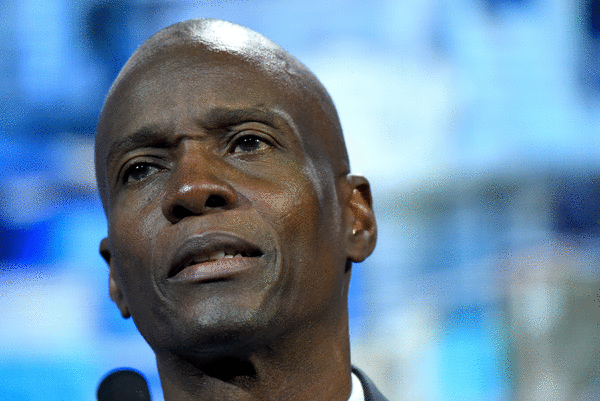
Christian Emmanuel Sanon took the witness stand Thursday in his own defense, spending much of his testimony addressing questions about his professional background, which prosecutors have sought to cast doubt on, and trying to explain how his involvement in Haiti led to accusations that he conspired to violently overthrow President Jovenel Moïse and install himself in his place.
Over roughly three hours, Sanon, who turns 68 later this month, also described how he came to know four South Florida men convicted earlier this year in Moïse’s assassination of five counts, including a conspiracy to kidnap or kill someone outside the United States and a conspiracy to lead a military expedition against a friendly nation, a violation of the U.S. Neutrality Act, which bans American citizens from waging war against any country at peace with the United States. The men now face life sentences, and expect to be sentenced in February .
The Haiti-born Sanon had originally been scheduled to stand trial in U.S. District Judge Jacqueline Becerra’s Miami federal courtroom alongside James Solages, Walter Veintemilla, Antonio “Tony” Intriago and Arcángel Pretel Ortiz. But his case became separated from theirs due to health reasons.
Prosecutors have portrayed Sanon as someone driven by greed and political ambition, while questioning his claims that he’s a doctor and physician. Before resting their case Tuesday after six weeks of testimony, prosecutors sought to connect the married Haitian-American father of three adult children to the South Florida plotters and others charged in the sprawling conspiracy.
They presented hundreds of text messages, testimony from FBI agents and analysts, and accounts from cooperating witnesses, including Sanon’s longtime friend and business partner, Frederick Bergmann. The Tampa businessman, during his testimony, tied Sanon to the plot after testifying about their exchanges before and after the assassination.
Bergman, who Sanon portrayed as someone obsessed with making money and who suffered from alcoholism and mental illness, is serving a nine-year sentence after pleading guilty to illegally sending bulletproof vests to Haiti for Sanon’s security team, who have been charged. Bergmann falsified the shipping labels by saying the contents were “medical x-ray vests and school supplies” when he shipped the 20 vests from Miami one month before the deadly assault.
Unlike the defense mounted by the four men convicted in May, Sanon’s lawyers are not arguing that others killed Moïse on July 7, 2021. Instead, they contend that by the time the assassination happened, Sanon had already been sidelined in favor of Windelle Coq Thélot, a former justice on Haiti’s Superior Court who died while in hiding in January 2025.
Moïse was shot to death in his second floor bedroom, and his wife Martine was seriously injured after the squad of Colombian former soldiers stormed his residence in the middle of the night. The Colombians had initially been recruited to provide security for Sanon as he sought to mobilize pastors and Protestant churchgoers in Port-au-Prince behind his political crusade, according to testimony during trial.
The men were hired by Doral-based Counter Terrorist Unit Security and Counter Terrorist Federal Academy, collectively known as CTU. Their owners, Intriago and Pretel, respectively, were introduced to Sanon, he testified, by Solages, a Haitian-American handyman who worked for CTU.
Sanon said he first met Solages in June 2020 over the telephone after being introduced by a doctor who worked with Marky Kessa, the mayor of Jacmel and a longtime friend.
Months later, Sanon said, in March 2021, Solages called and asked “if I was still interested in politics.”
“I said, ‘Well, that’s what I’m in Haiti working on,’” Sanon testified. “And he said … ‘I have a group of people I would like you to meet.’”
Later, during a conference call, Sanon said, he was introduced to a group of Spanish-speaking men who identified themselves not by name but by military rank.
“There was a general, there was colonel,” he said.
They included Intriago and Pretel, who in an initial face-to-face meeting in Doral would claim to be a retired U.S. military officer, and someone affiliated with the Justice Department, respectively. Solages claimed to be a sergeant in the U.S. army, Sanon said.
“Everybody was speaking in Spanish ... and English with a very heavy accent,” Sanon said.
He raised his concerns to Solages, asking him, “Who are these people?”
“Don’t worry about it,” Solages responded, Sanon recalled. “They are key people. They are really people that you must meet.”
Despite not being impressed, Sanon said he later met with the men at a restaurant in Doral and then at their offices during a three-hour span.
“They discussed what I wanted to accomplish in Haiti,” Sanon testified, adding that they also had him sign a non-disclosure agreement. “They said they could help me get contacts in America, but he has to do a search of me to make sure I am clean.”
How Sanon and the four men, who prosecutors accused of being his co-conspirators, became entangled in the plot that culminated with Moïse’s shocking murder — and plunged Haiti deeper into political turmoil and gang-fueled chaos — has been one of the central questions surrounding the killing, which prompted investigations in both the United States and Haiti.
“Even though many people wanted me to run for president for many years, I never wanted to because I don’t want to do anything illegal,” he said.
Days before Sanon was set to go on trial, prosecutors unveiled a sixth superseding indictment that expanded the case to include 17 Colombian former soldiers transferred from Port-au-Prince to Miami; the former head of Sanon’s political party, Ayiti 2054; his personal assistant who is fighting extradition from Canada; a former government official and several South Florida residents accused of helping to finance the conspiracy through fraudulently obtained pandemic-era relief funds and other government loans.
By putting Sanon on the stand, defense lawyers Humberto Dominguez and Zeljka Bozanac are hoping to raise reasonable doubt among the 12 jurors who have heard prosecutors describe their client as a “purported” pastor who sought to enlist gangs and a rogue police force to bring down the president.
Prosecutors argue that even after Sanon was cast aside, he continued to hope for a position in a post-Moïse government.
On Thursday, he testified that he never aspired to be president and only entered politics “because of the situation in Haiti.” Moïse had been ruling by decree after having dismissed both chambers of Parliament after failing to hold timely elections and Haiti was mired in turmoil with constant protests.
Haiti’s politicians, Sanon said, were “fighting, throwing rocks, and they’re shooting at them.”
“It was always chaotic,” he said. “So then I called the Christian community and I said, ‘Guys, we have to make a different decision because you guys, we are suffering. They’re kidnapping people. They’re killing people from your congregations. We have to do something. If these guys or politicians cannot do it, let’s get on the street and let the world know what’s going on.’”
He soon mounted a bureau and began sending letters to the State Department, the European Union and the media to alert them of the situation, he said. “In fact, one of the leaders of the European Union met with me in Haiti,” Sanon said.
Prosecutors alleged that Sanon presented himself as having the backing of the State Department, a point likely to figure prominently in his cross-examination. They also challenged his credentials of being a doctor and pastor, showing that there were no records of him working at the U.S. hospitals he claimed on websites.
During his testimony, Sanon, who migrated to the United States as a teenager, acknowledged that he is not licensed to practice medicine in the United States, having never passed the required medical board exams. He also said he did not attend a formal theological seminary, while describing himself as someone who established churches in Florida and the Midwest in the Haitian community.
“I’m a planter of churches,” he said.
Born in Marigot in southeast Haiti, he dropped out of college in New York. He said he attended medical school in the Dominican Republic, and completed the required training to be considered a doctor there and practice medicine in Haiti. On numerous occasions during his testimony Sanon referred to a diagnostic center he operated in Haiti as a hospital, and painted himself as a doctor who referred patients to the U.S. He also claimed to have served as the physician of Frank Cine, a once-powerful Haitian telecom tycoon.
Although he promoted his nonprofit efforts in Haiti, much of Sanon’s testimony centered on a series of business ventures that failed to take hold in Haiti, from trying to construct a hospital to opening a network of medical laboratories across the country. There was also an attempt, he admitted, to enter Haiti’s lucrative fuel business.
After claiming to have “lowered the price of gas in Haiti because of my participation,” in the business, he testified “we were never able to provide any gas because we never were able to raise the amount of money that we needed.”
.
©2026 Miami Herald. Visit miamiherald.com. Distributed by Tribune Content Agency, LLC.



Comments