Abdelrahman ElGendy wins National Book Award after US denies his visa to attend ceremony
Published in News & Features
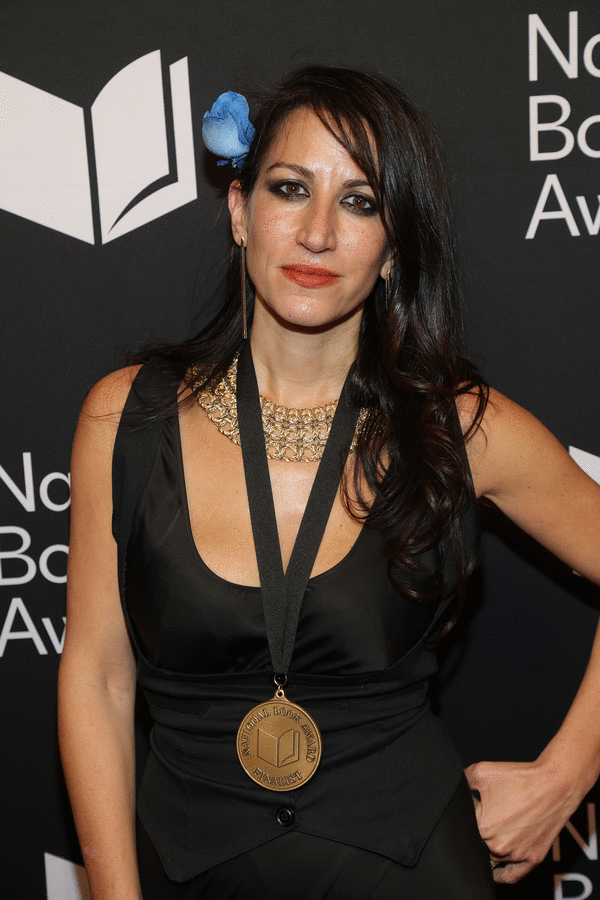
LOS ANGELES — Hannah Lillith Assadi and Abdelrahman ElGendy were the big winners at the 77th National Book Awards, honored for their works in fiction and nonfiction, respectively, as the prestigious literary prizes were announced Wednesday at a gala at Cipriani Wall Street in New York City.
ElGendy was notably absent from the ceremony after the U.S. consular office denied a visitor visa for the author, who fled the United States in April 2025 in fear that he would be deported back to Egypt, where he was a political prisoner for more than six years. He dedicated the award to Palestinians, political prisoners and "to the 10s of 1000s of souls disappeared into ICE concentration camps."
"If you're listening to this, then a years-long dream of mine has come true, and I'm not there to live it with you," the author, now living in the United Kingdom, wrote in an acceptance note read by his editor at Hogarth, Helen Thomaides.
The speech continued that ElGendy had fantasized about writing a memoir from his prison cell in Egypt, and then dreamed that book, "Huna: A Memoir of Revolution, Prison, and Becoming," would one day win an award.
"Today, that dream should have come full circle, but like so many of the circles ruptured in my life, it will remain unfinished, broken by an oppressive regime with a fascist ideology whose concentration camp stands ready to swallow the bodies it deems undesirable."
After Thomaides' remarks, the prize for fiction was awarded to Hannah Lillith Assadi for her novel "Paradiso 17," which follows Palestinian protagonist Sufien, who is displaced during the 1948 Nakba. Assadi said she began writing the story from the deathbed of her late father — the book was inspired by his life.
"In the course of its writing, I've experienced deep personal grief and unimaginable collective grief," she said. "I've watched cancer ravage my father's body, and genocide ravage his people and their children. And perhaps this is the Palestinian story on this earth, so beautiful, so painful, and isn't that story all of ours?"
Though presenters and honorees tackled somber topics through the course of the evening — war, immigration, AI and loss were top of mind — a bit of comedic relief came from the ceremony's host, "Twin Peaks" and "Sex and the City" actor Kyle MacLachlan — whose bestselling memoir "Fictional Selves" hit bookshop shelves in September.
Japanese Breakfast front woman and bestselling "Crying in H Mart" author Michelle Zauner kicked off the evening with a musical performance before MacLachlan used the podium to touch on the woes of modern publishing. "This is not an easy time for the publishing industry," he said. "You all know this: artificial intelligence and content flooding, market consolidation, retailer dominance, supply chain issues, and ink shortages driven by geopolitical disruption. No wonder you're drinking so heavily."
"I had some literary bumps and bruises of my own this year," he continued. "In fact, some of you may know that Rachel Cusk's 'Life of M' was based on me."
Brenda Hillman's "Still House in the Desert: An eco-contemplation" won for Poetry. Hillman, who previously won the 2009 Los Angeles Times Book Prize for Poetry for "Practical Water," walked her book to the podium to accept the award with her, saying she thinks books have feelings. "This book is about my mother and my childhood and cleaning house after your mother dies, which is an experience a lot of us have had," she said, adding that she wanted to honor immigrant mothers.
"I want to thank our mothers, all of our mothers on Earth and in the zone beyond us. My mother was from Brazil, and she never felt completely at home in America, and so it took her a long time to be comfortable. I want to lift up this award to our mothers who are no longer with us."
"Centroeuropa," written by Spanish novelist Vicente Luis Mora and translated by Rahul Bery, was awarded the prize for translated literature. Mora described the novel as a book about a man trying to bury his wife who'd been killed. "He tries to bury her under the earth, but he cannot do it because the earth is full of frozen corpses of soldiers" from numerous wars.
Mora thanked Bery for his "compelling and magnificent translation of the book," adding, "if you want to translate something from Spanish and Portuguese into English, I think he's the guy."
Bery described translating such an experimental and "fiendishly difficult" novel, and noted that in a year dominated by discourse around AI and the threat to human creativity and endeavor, he likes to think that "for now, at least, this is the kind of thing a computer probably couldn't do."
He continued that he appreciated that the judges recognized the work as very human. "I think that's something worth celebrating."
David Levithan and Gabriel Duckels' "The Fight of Our Lives: AIDS in America" took home the award for young people's literature. The authors gave impassioned speeches, with Duckels saying that the honor comes four years since they started writing the book, which is about the AIDS crisis, "and that's not a simple story to tell," he said.
"It's not an easy one to hear. It's not a story that's finished. It's never been just one story. It's hundreds and thousands, millions of stories scattered across borders, oceans, decades, generations, and our aim with this book has been to write a history of HIV and AIDS that didn't oversimplify or generalize, that centers HIV and AIDS as not just part of the past but part of the present, an epidemic whose legacy young people all deserve to understand."
Levithan used the platform to call on writers "who have acted like the attack on the freedom to read and write is not your problem" to get involved, while thanking folks across the broader book world who have been fighting for the freedom to read and write, including librarians, teachers and students. "We will not allow our youth, particularly our trans and nonbinary youth, to go unsupported. We will not let the noise of others drown out the music of who we are. We will not let them use AI to filter or delete us."
Two lifetime achievement awards were also given at the ceremony. Dr. Perri Klass was awarded the Literarian Award for outstanding service to the literary community. The longtime national medical director of Reach Out and Read, a nonprofit that integrates books and early literacy guidance into pediatric care, gushed at the "overwhelming moment for a pediatrician!"
"But as a proud pediatrician, I have brought with me to the stage my two essential pieces of technology for going into a room: the stethoscope and the picture book."
The Medal for Distinguished Contribution to American Letters, which recognizes a writer who has enriched our literary heritage through their body of work, was awarded to Salman Rushdie. "Let's start like this: A boy is born in Bombay at the end of the British empire, 79 years ago. Born just before the freedom that came at midnight, and that same boy improbably ends up halfway around the world on a stage in New York City with this medal hanging from his neck. If that's not magical realism, I don't know what is," he said.
"I have given my life to the art of words, to the creation of books, and to their defense, to the exercise of artistic freedom, and to an insistence on the importance of that freedom," he continued. "And I can't think of a better way to have spent my time."
Here is the list of the 2026 National Book Award winners and finalists:
Fiction
Hannah Lillith Assadi, "Paradiso 17" | WINNER
Edwidge Danticat, "Dèy"
Julián Delgado Lopera, "Pretend You're Dead and I Carry You"
Valeria Luiselli, "Beginning Middle End"
Morgan Thomas, "Mad Eden"
Nonfiction
Abdelrahman ElGendy, "Huna: A Memoir of Revolution, Prison, and Becoming" | WINNER
Colin Asher, "The Midnight Special: The Secret Prison History of American Music"
Camonghne Felix, "Let the Poets Govern: A Declaration of Freedom"
Sara Nović, "Mother Tongue: A Memoir"
Joseph Osmundson, "Spawning Season: An Experiment in Queer Parenthood"
Poetry
Brenda Hillman, "Still House in the Desert: An eco-contemplation" | WINNER
Victoria Chang, "Tree of Knowledge"
Carolina Ebeid, "Hide"
Fady Joudah, "Exhibit G: Poems, Essays, and Photographs of Gaza"
Susan Stewart, "Bramble"
Translated literature
Vicente Luis Mora, "Centroeuropa." Translated from the Spanish by Rahul Bery | WINNER
Karl Ove Knausgaard, "The School of Night." Translated from the Norwegian by Martin Aitken
Intan Paramaditha, "Night of a Thousand Hells." Translated from the Indonesian by Stephen J. Epstein and Tiffany Tsao
Mohamed Mbougar Sarr, "Pure Men." Translated from the French by Lara Vergnaud
Samar Yazbek, "Your Presence Is a Danger to Your Life: Voices of Survival and Witness in Gaza." Translated from the Arabic by Leri Price
Young people's literature
David Levithan and Gabriel Duckels, "The Fight of Our Lives: AIDS in America" | WINNER
Elana K. Arnold, "Holloway"
Tae Keller, "When Tomorrow Burns"
Keala Kendall, "That Which Feeds Us: A Hawaiian Gothic"
Julian Randall, "Shook"
©2026 Los Angeles Times. Visit latimes.com. Distributed by Tribune Content Agency, LLC.


Comments