Young voters fear mass shootings but are divided on gun control
Published in Political News
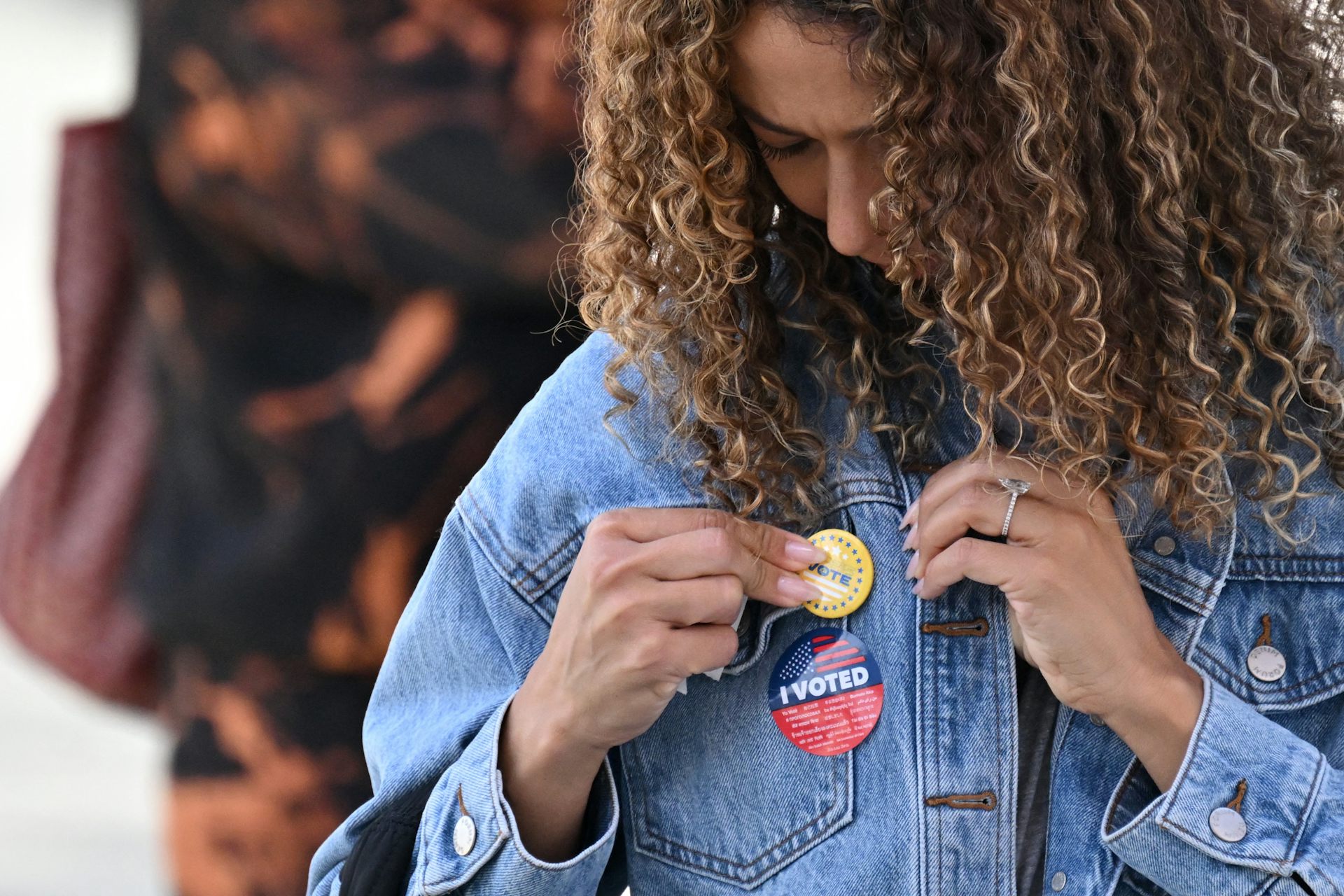
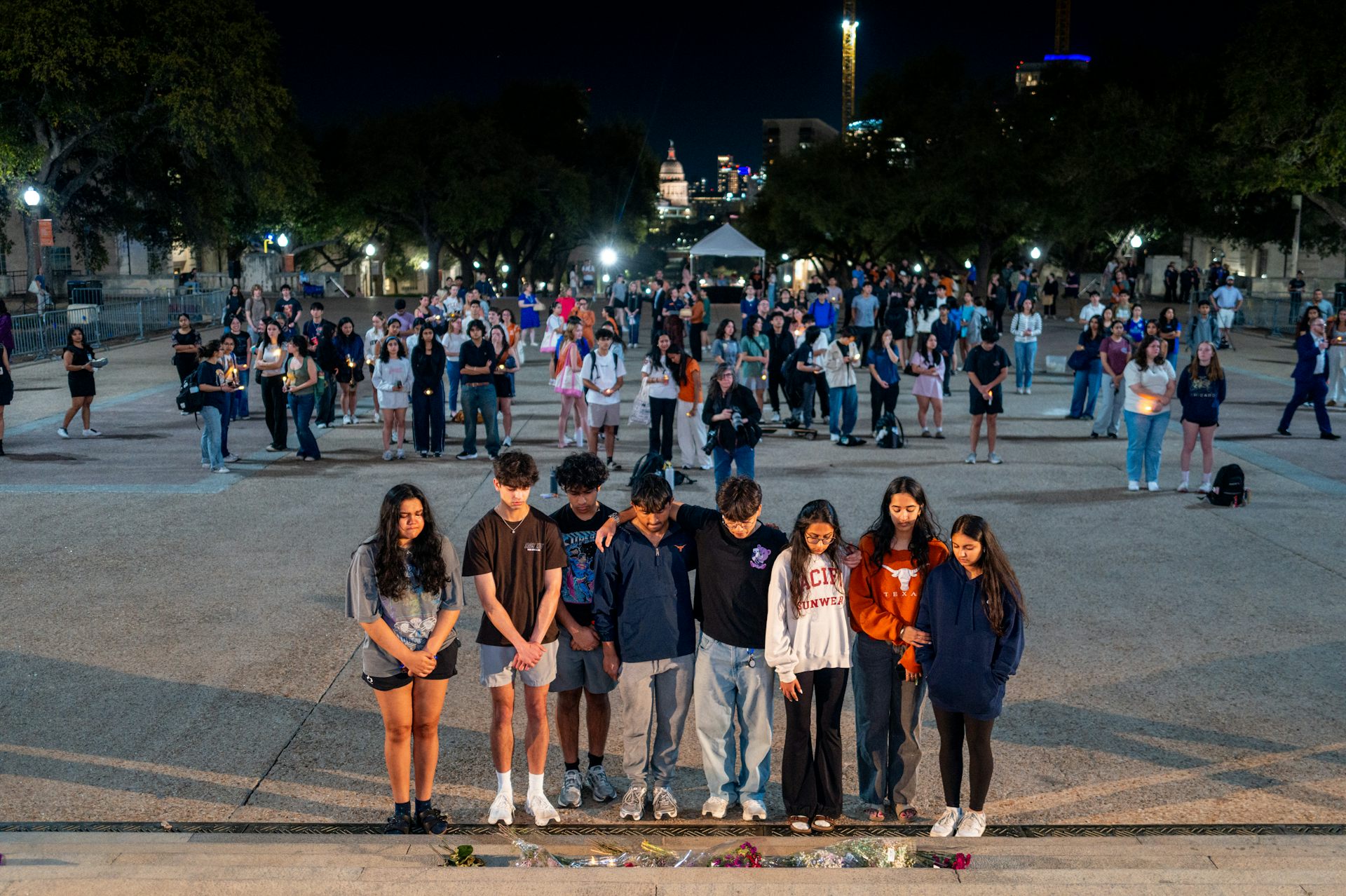


Nearly 50 million Americans ages 18 to 29 are eligible to vote in the upcoming midterm elections, and about 60% say they plan to. If they follow through, it would break midterm turnout records for voters under 30.
Gun control is an issue these young voters care about more than the public at large does, and it’s easy to understand why: In their lifetime, mass shootings have been a recurring part of American life.
Directly experiencing a mass shooting is rare, yet some young people have survived two before turning 25. When a gunman opened fire at Brown University in December 2025, at least two students on campus had already experienced a school shooting before they got to college. The same thing happened in April 2025, when students who lived through the 2018 Parkland, Florida, shooting at Marjory Stoneman Douglas High School found themselves caught in another shooting at Florida State University. As one of them put it: “This is America.”
Researchers have called today’s young adults the “massacre generation.” They’re the first group to grow up entirely in the post-9/11, post-Columbine High School shooting era, with routine lockdown drills, heightened security in schools and nonstop media coverage of mass violence.
As criminologists who study the impacts of victimization and gun violence among young people, we wanted to know how growing up with the threat of mass shootings has shaped young adults’ views on gun legislation. In a recent study, we surveyed nearly 1,700 young adults, ages 18 to 29, across the country to find out. We found that fear of mass shootings pulls this generation apart along political and gender lines: It pushes some toward wanting stricter gun laws and others in the opposite direction.
Mass shootings account for about 1% of gun deaths in the U.S. Still, they profoundly shape how safe millions of Americans feel. In a 2019 survey by the American Psychological Association, nearly 80% of Americans said the possibility of a mass shooting stressed them out, and a third said they avoided certain places because of it. The fear has become so common that clinicians now have screening tools to assess and treat people with anxiety over mass violence.
Young adults have also grown up watching the same heated gun debates play out after every tragedy. Gun control advocates call for stricter firearm restrictions to prevent the next mass shooting, whereas gun rights advocates push back with the “good guy with a gun” argument, a phrase made popular by the National Rifle Association. Supporters of the latter view say more armed citizens are needed to stop active shooters, so more people should be able to buy and carry guns with fewer restrictions, such as carrying in public without a permit or on college campuses.
Researchers have known for a long time that more guns don’t necessarily mean less violence. A 2021 study found that mass shootings were more common in states with higher rates of gun ownership, and gun homicides were more common in states with looser concealed carry laws. Yet even after decades of mass shootings, federal gun policy has barely budged. Even where individual states and local governments have passed assault weapons bans, including Connecticut and Cook County, Illinois, they’ve faced Second Amendment challenges that are now before the Supreme Court.
Young people have become some of the loudest voices in this debate, most notably through March for Our Lives – an organization started by Parkland survivors that focuses on ending gun violence – and other youth-led groups across the country. And because pro-gun views tend to be more common among older Americans, many political observers assume stricter gun laws will follow as young people gain voting power.
This fall, voters will choose members of Congress and state lawmakers who can shape gun laws, and in a few states they’ll weigh in on gun policy directly. In Massachusetts, voters will decide whether to keep or repeal a 2024 law that, among other things, requires gun owners to register their firearms with the state, expands safety training for people applying for a gun license and broadens the state’s ban on assault-style weapons. In Arkansas, they’ll decide whether to change the state constitution to more strongly protect gun rights, including the right to own ammunition and gun parts. If young adults turn out in record numbers, their views could help determine outcomes like these.
So where do young adults stand? We’ve found that a shared fear of mass shootings does not necessarily lead to shared views on guns. Our survey asked young adults to rate on a scale from 1 to 3 – from “not at all” to “a lot” – how much they fear that they or someone they love will become a victim of a mass shooting. More than 60% reported moderate or high levels of fear, including about 17% who fell in the high-fear range.
In general, about two-thirds of young adults said people should need a permit to carry a gun in public and that guns shouldn’t be allowed on college campuses. About 6 in 10 disagreed that owning more guns makes people safer, and a similar share disagreed that gun control laws are unconstitutional.
We found that young adults who worried more about mass shootings tended to be more supportive of gun control. But this pattern didn’t hold for young men, Republicans or those who were politically conservative. For these groups, the opposite was true: The more they feared mass shootings, the less they supported gun restrictions. Young adults are divided on gun control, and those divisions are sharpest when fear runs high.
In the coming years, the massacre generation is on track to become part of the largest voting bloc in the country. Most young adults share a fear of mass shootings, but they disagree on what to do about them. And with each new mass shooting, that divide may only deepen.
This article is republished from The Conversation, a nonprofit, independent news organization bringing you facts and trustworthy analysis to help you make sense of our complex world. It was written by: Jillian Turanovic, University of Colorado Boulder and Kristin Lloyd, Clemson University
Read more:
Students are taught to hide in closets and under tables if there is a school shooting – but does practicing for this possibility keep kids safe?
Political violence: What can happen when First Amendment free speech meets Second Amendment gun rights
Did the assault weapons ban of 1994 bring down mass shootings? Here’s what the data tells us
Jillian Turanovic has recently received research funding from the National Institute of Justice, the National Collaborative on Gun Violence Research, the Bureau of Justice Assistance, and Arnold Ventures, none of which are responsible for this content.
Kristin Lloyd has recently received funding from the Bureau of Justice Assistance, who is not responsible for this content.










































Comments