No shoes at home? House shoes, socks, or bare feet?
Published in Home and Consumer News
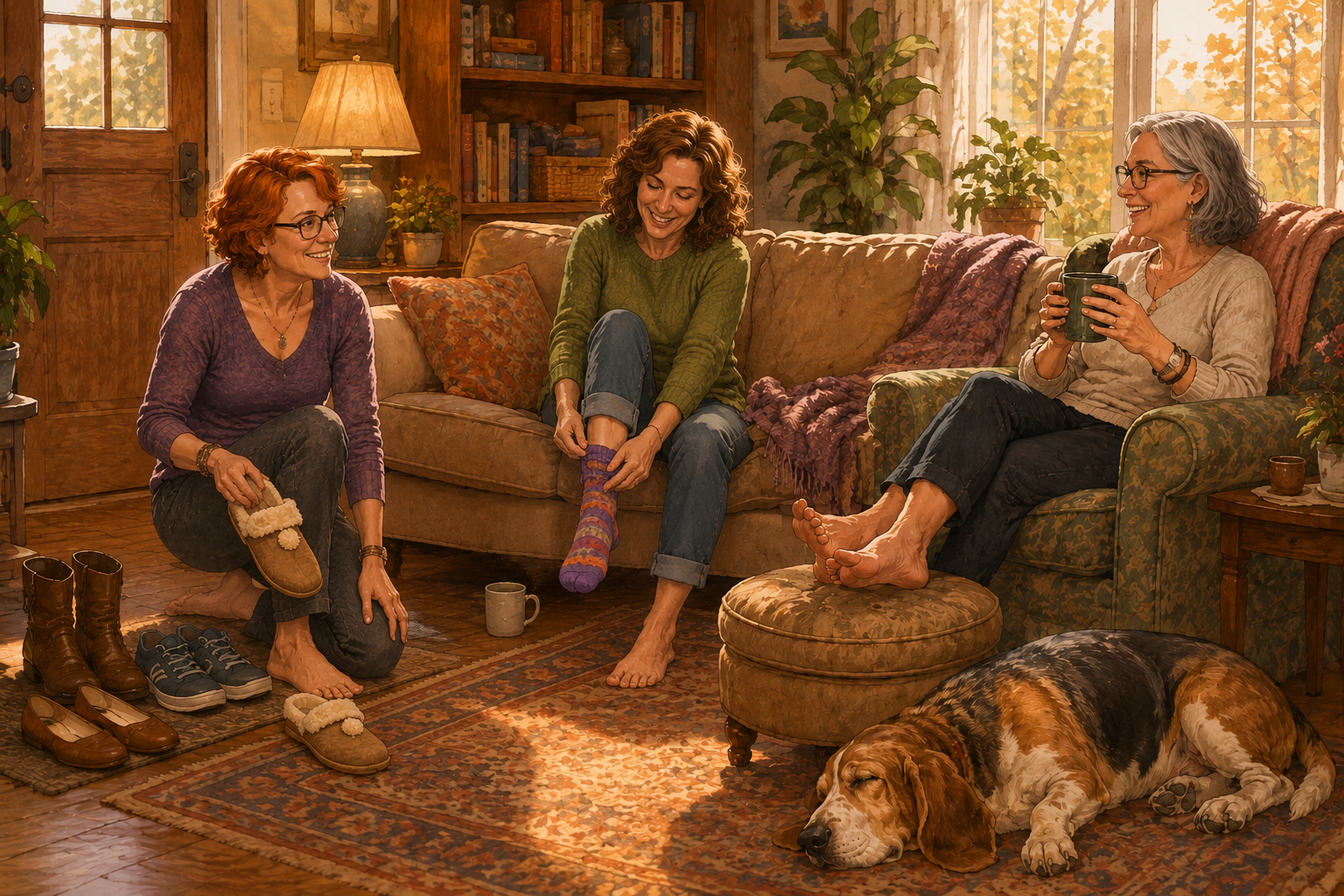
By all appearances, the modern American home is becoming a shoe-optional zone.
Whether prompted by concerns about dirt, allergens, comfort or simple habit, more households are asking visitors to remove their shoes at the door. Once that happens, a surprisingly consequential question follows: What comes next?
For some, the answer is a pair of dedicated house shoes. Others pad around in socks. Many prefer to go barefoot, arguing that nothing feels more natural after a day spent in work boots, dress shoes or sneakers.
The choice may seem trivial, but it touches on cleanliness, health, culture and personal comfort. It can also reveal a great deal about how people think their homes should feel.
A growing no-shoes culture
In many parts of the world, removing shoes indoors has long been standard practice. In Japan, much of Scandinavia and numerous Asian and Middle Eastern cultures, outdoor footwear at home is considered impolite or unhygienic.
In the United States, the practice is becoming more common. Families cite several reasons: reducing tracked-in dirt, protecting flooring and minimizing exposure to pollen, pesticides and bacteria.
Researchers have found that shoes can carry a wide variety of substances, from lawn chemicals to fecal bacteria and ordinary street grime. For households with crawling infants, allergy sufferers or light-colored carpets, the benefits of leaving shoes at the door are easy to understand.
Still, once the shoes are off, preferences diverge sharply.
The case for house shoes
House shoes occupy a practical middle ground.
Unlike outdoor footwear, they remain indoors and therefore do not bring in dirt from parking lots and sidewalks. At the same time, they offer cushioning, arch support and a modest layer of protection from hard floors.
This can be particularly valuable for older adults or anyone coping with plantar fasciitis, arthritis or general foot fatigue.
House shoes range from structured orthopedic slippers to lightweight sandals and clogs. Some homeowners maintain a basket of clean guest slippers near the front door, a gesture that combines hospitality with hygiene.
Supporters say house shoes make a home feel orderly and intentional.
“It’s like changing from work mode into home mode,” says one longtime adherent. “The moment I put on my slippers, my shoulders drop.”
The appeal of socks
For many people, socks are the default answer.
They are warm, familiar and already in place when shoes come off. In cooler months, a thick pair of wool socks can make a house feel especially cozy.
Socks also preserve some modesty and provide a light barrier between feet and floor surfaces.
Yet they are not without drawbacks. On polished hardwood or tile, socks can be slippery. They also wear quickly if used as primary indoor footwear, particularly on textured surfaces.
Some households address this with grippy socks featuring rubberized tread on the soles, combining warmth with improved traction.
For those who dislike the sensation of bare floors but do not want another pair of shoes, socks offer a simple and inexpensive solution.
The enduring popularity of bare feet
A significant number of people prefer to go barefoot whenever possible.
The attraction is immediate and intuitive. Bare feet are cooler in summer, unconstrained and often more comfortable than any manufactured alternative.
Many advocates say walking barefoot at home simply feels right.
There are practical benefits as well. Bare feet cannot be misplaced, require no laundering beyond ordinary bathing and create direct contact with the floor, which some people find grounding and relaxing.
Podiatrists note that going barefoot can strengthen small muscles in the feet and improve sensory feedback, although people with diabetes, neuropathy or balance concerns are often advised to wear some form of protective footwear.
For healthy adults in a clean environment, however, barefoot living remains a widely embraced domestic pleasure.
There is also an undeniable emotional component. For many, kicking off shoes marks the true beginning of being home.
Regional and generational differences
Preferences often reflect upbringing and geography.
In colder climates, slippers and thick socks are especially common. In warmer regions, bare feet or minimal footwear may dominate for much of the year.
Family traditions matter, too. Some people grew up in strictly shoe-free households and feel instinctively uncomfortable seeing outdoor shoes on carpet. Others were raised where shoes stayed on unless someone was headed to bed.
Generational attitudes are shifting as well. Younger homeowners, particularly those influenced by wellness and minimalist trends, are often more likely to establish clear no-shoes policies.
What experts recommend
Health specialists generally agree on one point: the best indoor choice depends on the individual.
People with foot pain or structural issues may benefit from supportive house shoes. Those prone to slipping should be cautious with socks on smooth surfaces. Healthy individuals with no specific concerns may do well barefoot.
The most important factors are cleanliness, safety and comfort.
In many households, the solution is flexible. One family member may wear orthopedic slippers, another thick socks, and a third nothing at all.
The real meaning of taking shoes off
The debate over slippers, socks and bare feet is ultimately about more than what covers the foot.
Removing shoes creates a subtle but powerful transition. The demands of the outside world remain at the threshold while the routines of domestic life begin.
Whether someone reaches for felt slippers, keeps on wool socks or enjoys the freedom of bare feet, the act signals a shift toward rest and familiarity.
A house becomes a home not because everyone makes the same choice, but because each person finds the small ritual that allows them to settle in.
========
Thaddeus Merriweather writes about the intersection of domestic habits, comfort and everyday culture. He lives in coastal Virginia with an assortment of opinionated pets and a steadfast belief in the importance of taking one's shoes off at the door. This article was written, in part, utilizing AI tools.





Comments