Trump orders blockade of sanctioned oil tankers in Venezuela
Published in News & Features
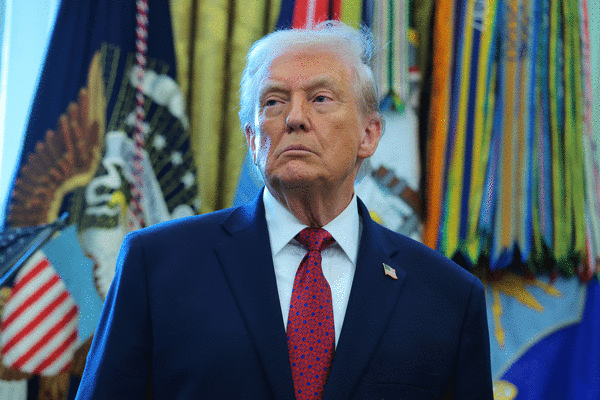
WASHINGTON — President Donald Trump said he was ordering a “TOTAL AND COMPLETE BLOCKADE OF ALL SANCTIONED OIL TANKERS” going into and leaving Venezuela, ratcheting up pressure on Caracas amid a U.S. military buildup in the region and the threat of land strikes.
“Venezuela is completely surrounded by the largest Armada ever assembled in the History of South America,” Trump wrote on social media Tuesday. “It will only get bigger, and the shock to them will be like nothing they have ever seen before — Until such time as they return to the United States of America all of the Oil, Land, and other Assets that they previously stole from us.”
Trump said he was also designating the regime of Venezuelan President Nicolas Maduro as a “FOREIGN TERRORIST ORGANIZATION.” And he accused the “illegitimate” regime of “using Oil from these stolen Oil Fields to finance themselves, Drug Terrorism, Human Trafficking, Murder, and Kidnapping.”
Oil rose from the lowest level since 2021 on the U.S. president’s post. West Texas Intermediate climbed above $56 a barrel after tumbling almost 6% over the previous four sessions.
The move represents an escalation of the Trump administration’s pressure on Maduro, whom it has accused of presiding over a narco-trafficking operation. Last week, the U.S. seized a sanctioned oil tanker off Venezuela’s coast.
Earlier, an armada of four supertankers originally headed for Venezuela reversed course following the seizure of the sanctioned tanker, named The Skipper.
The Pentagon has also conducted more than 20 strikes against purported drug-trafficking vessels in waters near Venezuela and Colombia, killing dozens, and Trump has suggested numerous times that the U.S. could strike countries on land and that Maduro should be removed from power.
The Maduro government has characterized the U.S. actions as a grab for Venezuela’s oil reserves, the biggest in the world.
The socialist-run country’s economy has been strained since Trump tightened oil-trading restrictions earlier this year. The government’s supply of dollars, almost all tied to crude sales, had already fallen 30% in the first ten months of 2025. The squeeze has pressured the exchange rate and driven up prices, with annual inflation expected to top 400% by year’s-end, according to private estimates from local economists who requested anonymity for fear of reprisal.
While state oil company Petroleos de Venezuela SA, or PDVSA, controls the petroleum industry in the country, it works with international partners including Houston-based Chevron Corp. to drill in many parts of the country. Under the current arrangement, Chevron pays Venezuela a percentage of the oil it produces with PDVSA in joint ventures, under a license issued by the US Treasury that exempts the American company from sanctions.
Chevron lowered the price of Venezuelan crude offered to U.S. refiners following the seizure of The Skipper. The company’s operations in Venezuela continue in full compliance with laws and regulations applicable to its business, as well as the sanctions frameworks provided for by the U.S. government, Chevron said in a statement at the time.
In recent months, Maduro has called on his citizens to unite against what he said were U.S. threats and to enlist in the citizen militia, which he says already has more than 8 million members. He’s also deployed troops, ships, aircraft and drones to the border with Colombia, some states in the coast and an island.
Earlier this week, Maduro called the U.S. seizure of the tanker “criminal and illegal.”
White House Chief of Staff Susie Wiles, speaking in an interview with Vanity Fair published Tuesday, indicated that Trump’s motivations for his actions in Venezuela revolved around pressuring Maduro.
Trump “wants to keep on blowing boats up until Maduro cries uncle,” she said. “And people way smarter than me on that say that he will.”
_____
©2025 Bloomberg L.P. Visit bloomberg.com. Distributed by Tribune Content Agency, LLC.






Comments