New Miami-area group breaks organ recovery record. How it plans to change transplantation
Published in News & Features
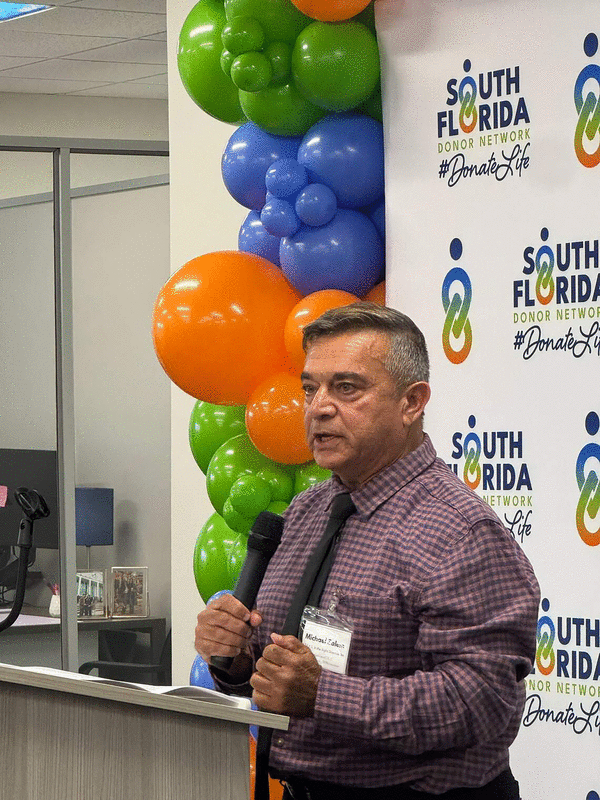
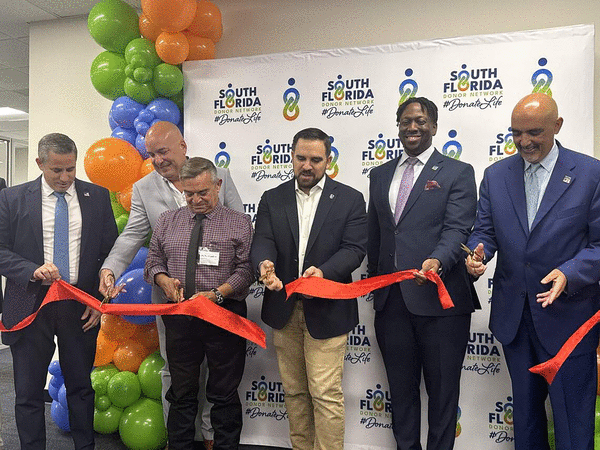


MIAMI — The new group tasked with retrieving organs for transplantation across South Florida and the Bahamas is already breaking records, just months after taking over operations from a decades-old nonprofit that was ordered shut by the federal government over safety-related issues and other concerns.
The South Florida Donor Network retrieved 79 organs from 24 donors in June, the highest monthly totals ever recorded in the South Florida donation service area, according to the nonprofit.
“In the short time that we’ve been in operation, I am so happy and humbled to report that more lives have been saved and healed through the heroic donors — the courageous families that confront that grief — to lead to somebody’s life being saved in this community than ever before in this short time,” Joseph “Joe” Ferreira, the network’s president and CEO, told a crowd filled with donor families, organ recipients, transplant hospital representatives, public officials and supporters during the grand opening of the organization’s new Miami Lakes headquarters earlier this month.
The nonprofit is now one of four federally designated organ procurement organizations (OPOs) in the state tasked with helping to gather organs and tissues for South Florida hospitals that offer transplants. Its service area spans a population of more than 7 million people across six South Florida counties — Miami-Dade, Broward, Palm Beach, Monroe, Collier and St. Lucie — and the commonwealth of the Bahamas.
‘Where grief and gratitude exist in the same moment’
Ferreira told the Miami Herald at the event that there are a lot of misconceptions about organ donation “that fuels the lack of engagement with organizations like us.” He said the most common, and unfounded, myth is that doctors won’t try hard to save the life of a registered organ donor.
“Part of our role in the community is messaging the facts around how diligently the hospitals try to save you with every resource and every talent that they have,” he said. Once a person dies, that’s when the process would begin to retrieve viable organs, but only if the patient previously consented to be a donor or if their family agreed to donate their organs.
People can donate one kidney, a piece of liver, and certain other organs and tissues while alive, according to the U.S. Health Resources and Services Administration, the part of the federal government that oversees organ donation. But nearly all organs — including hearts and lungs — can only be donated after death.
More than 109,000 people across the country are waiting for a lifesaving organ. In Florida, over 6,000 people are on a transplant wait list, with another person added every seven minutes, according to Donate Life Florida.
Twelve people die each day waiting for an organ in the U.S. One donor “can save 8 lives and enhance over 75 more,” according to the Health Resources and Services Administration.
“Organ donation and transplantation is one of the few places where grief and gratitude exist in the same moment,” Tyre Gray, South Florida Donor Network’s chief administrative and legal officer, told the crowd. “There’s the grief of a family that loses a loved one, but there’s a gratitude from the recipients because they get another Christmas, they get another opportunity. So please know that your choice in that moment is not unnoticed.”
Gray himself knows what it’s like to be on the waiting list. He was diagnosed at age 25 with focal segmental glomerulosclerosis, a rare kidney disease. At first, he didn’t believe it. A year later, he was on the transplant list, waiting for a kidney. By age 30, he was too sick to work.
Finally, at 31, Gray received his new kidney while finishing his second year of law school. He has three kidneys now and will likely have to take anti-organ-rejection medication for the rest of his life.
“Every single day I recognize that I’m living not just for myself but really extending a legacy, and I want to make sure that I make [my donor family] proud on a day-to-day basis,” said the now 46-year-old Gray.
Not too long ago, Miami Lakes resident and community activist Michael Salem was on the list, too. Salem was 53 when he had a heart attack. Doctors at Palmetto General Hospital in Hialeah told him he had three blocked arteries. He underwent a balloon procedure to help open up his arteries, and later, a triple bypass surgery.
But his body’s “plumbing system” wasn’t working properly, he said. His heart was failing. At the Miami Transplant Institute, part of Jackson Health System, he was implanted with an LVAD, a device that helps the heart pump blood. Some people live the rest of their lives with the machine. Others, like Salem, use it as a temporary fix while they wait for a new heart.
After years of waiting, at age 58, he found his match.
“My hero gave me a second chance to live,” Salem, now 64, told the crowd as he teared up. “To my hero, I’m here. Your heartbeat will be with my heartbeat every single day of my life. I pledge myself to make sure that no matter what I do, you will always be remembered. Every single heartbeat that I have will be a reminder of you, and you will last as long as I do.”
What comes next
Executives with the South Florida Donor Network say the nonprofit is planning to heavily invest in outreach efforts in the coming months to advocate for the importance of organ donation.
Ferreira says the group wants to talk to people about safety, dispel myths and show residents that while its parent company is based in Las Vegas, the South Florida Donor Network is made up of locals who are part of the South Florida community it serves. It also wants to differentiate itself from the now-shuttered Life Alliance Organ Recovery Agency, which had been responsible for organ retrieval across South Florida and the Bahamas since 1978 and was a division of the University of Miami Health System.
Federal regulators moved to decertify Life Alliance last year following an investigation that they say “uncovered years of unsafe practices, poor training, chronic underperformance, understaffing, and paperwork errors.” Life Alliance did not appeal the decision.
After that, everything moved quickly. In January, the U.S. Centers for Medicare and Medicaid Services announced that nonprofit Nevada Donor Network, a decades-old organization that typically ranks high in federal performance metrics, had won the bid to take over Life Alliance’s service area. By the end of March, the Las Vegas-based group was officially operating in the region through its newly created sister, the South Florida Donor Network. Organ recovery never stopped during the transition period.
When asked about the organization’s safety safeguards, Ferreira said that “patient safety and being good stewards of the gift [of life] has been a priority for us and is already part of our cultural institution.” He stressed that the organization wants to restore trust in the organ procurement process and has been intentional on who it’s hired to ensure it has a team of people “who are knowledgeable on the process and have confronted those challenges and barriers that could potentially go in the wrong direction.”
The organization is mostly made up of South Florida employees, including new hires and some workers that came from Life Alliance, though it does have some leadership support from its Nevada sibling, according to Ferreira.
For Gray, the kidney recipient who now works for the OPO, it feels like a “full-circle moment” to work for a group that lets him “do the same exact work that saved my life.”
Next year will mark 15 years since Gray received his new kidney. He’s making plans to celebrate already.
“I’m going to throw my kidney a quinceañera, so I am looking for padrinas,” he said.
How to register
If you want to become an organ donor, enroll in your state’s donor registry. Family members can donate a loved one’s organs, even if they never registered to do so. But that can be a difficult end-of-life decision to make, so it’s best to make those decisions ahead of time.
It’s also worth noting that while family can choose to donate organs of a loved one, they can’t override your decision to donate organs if you have registered to do so.
©2026 Miami Herald. Visit at miamiherald.com. Distributed by Tribune Content Agency, LLC.






Comments