Medicare drug plans are hiking premiums while Trump claims victory on medicine prices
Published in News & Features
Millions of Medicare enrollees who buy stand-alone prescription drug plans will see their average monthly premiums rise by 50% in 2027, a new analysis finds.
But enrollees can avoid the average increase — from $34 a month to $51 — by switching to lower-cost plans during the program’s open enrollment period, which runs through Dec. 7.
Robert Travis Scott of Abingdon, Virginia, did just that in late October after he received a notice that his AARP-UnitedHealthcare Medicare drug plan premium would be increasing from $39.60 a month in 2026 to $121.90 in 2027. With just a little work checking prices online, Scott found a Humana plan for $19.30 with similar benefits.
“Yes, I am quite happy about that,” he said of the new plan he just found. He said he was stunned his existing plan was going up so much and worried that other seniors won’t shop for plans to save money. He estimates he saved himself about $1,000 for next year.
“With some plans increasing premiums substantially, the stakes are higher this year for people with Medicare stand-alone drug coverage if they sit on the sidelines during open enrollment,” said Juliette Cubanski, a vice president and the director of the Program on Medicare Policy at KFF, which conducted the analysis. KFF is a health information nonprofit that includes KFF Health News.
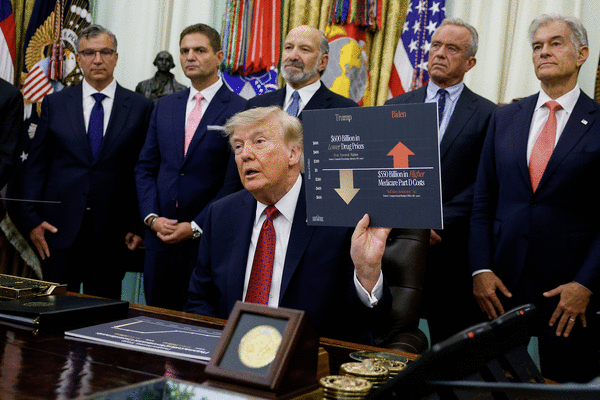
Rising drug costs are among the litany of affordability issues angering voters ahead of November’s midterm election. President Donald Trump, whose approval rating in some polls has dipped to the lowest level of his two terms in office, claims his administration has succeeded in negotiating lower prices from drug manufacturers.
“What we’re doing great with is pharmaceuticals, hundreds of billions,” Trump said at a campaign rally in Ohio on Oct. 28, ahead of the Nov. 3 midterms. “You should win just on this, everybody running. We have the lowest drug prices anywhere in the world. We went from the highest drug prices, we now have the lowest drug prices, favored nations, anywhere in the world.”
How much people actually pay for drugs varies widely, depending on what medicines individual patients need and their insurance coverage.
Medicare beneficiaries who get their drug coverage as part of private Medicare Advantage plans, which replace traditional Medicare coverage, will see much lower premium increases. The KFF analysis found these enrollees will pay an average of $9 for drugs as part of their overall monthly premium in 2027, or an increase of less than $2 per month.
More than half of Medicare beneficiaries are enrolled in Medicare Advantage health plans, which usually include a drug benefit, instead of the traditional program.
Nearly 25 million people are enrolled in Medicare stand-alone prescription drug plans, according to KFF. About 31 million get drug coverage through Medicare Advantage plans.
Premiums are just part of the higher costs Medicare enrollees are facing.
Most enrollees who buy a stand-alone drug plan or get drug benefits through Medicare Advantage plans will also have an annual deductible for drug coverage in 2027.
The average deductible in 2027 will be $643 for stand-alone plans, according to the KFF analysis, up from $540 in 2026. Drug deductibles will average $489 for those with Medicare Advantage plans, up from $360 in 2026.
In addition, most Medicare enrollees with drug coverage next year will have to pay coinsurance rather than copayments, the KFF analysis found. That can mean less predictable out-of-pocket costs because coinsurance requires paying a percentage of the cost of a drug, not a fixed amount.
One possible cause of the projected premium hikes is the Centers for Medicare & Medicaid Services’ decision in July to end early a three-year pilot program designed to keep down stand-alone premiums. The program paid subsidies to stand-alone plans in 2025 and 2026.
KFF said CMS’ decision to end that subsidy program after only two years could cause stand-alone premiums to rise in 2027.
CMS Administrator Mehmet Oz has called the subsidy program an insurance industry bailout.
KFF noted its analysis differs from CMS’ projection for a $1 increase in the national average premium, from $35 to $36, based on September 2026 enrollment. It said that CMS did not explain its calculation methods and that it’s possible CMS assumed people would switch to lower-cost plans.
CMS did not immediately respond to a request for comment on the KFF findings.
About 10.4 million Medicare enrollees, or 76% of enrollees in stand-alone drug plans who don’t get low-income subsidies, will pay a higher monthly premium in 2027 if they stick with the same plan, KFF found.
This includes 4.1 million enrollees who are currently in a zero-premium plan. They’ll automatically pay more in 2027, because there will be no zero-premium plans available, the KFF analysis found.
©2026 KFF Health News. Distributed by Tribune Content Agency, LLC.





Comments