SeaWorld fielding uptick in rescue calls for sick seabirds. 'They're extremely skinny'
Published in Science & Technology News
SAN DIEGO — An increase in deaths of seabirds along California’s coastline, including San Diego, is believed to be from starvation that many believe is linked to a persistent ocean heat wave.
SeaWorld San Diego said it is receiving multiple calls a day as beachgoers come across dead or dying birds on San Diego County’s beaches, including in La Jolla, Torrey Pines and Carlsbad. Calls began to increase in February.
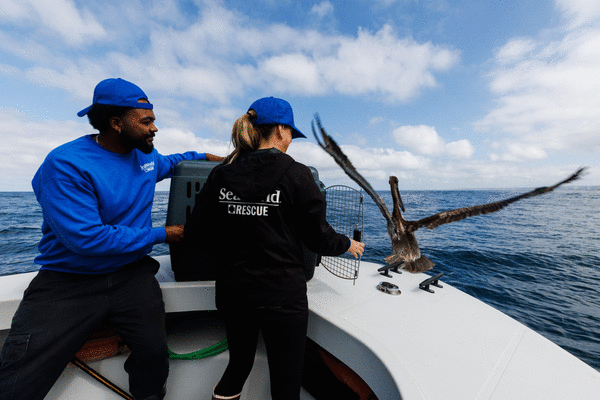
So far this year, the marine park’s rescue teams have picked up more than 100 birds, primarily Brandt’s cormorants, common murres and California brown pelicans. On Wednesday, SeaWorld personnel released five birds and two sea lions that had been nursed back to health back into the ocean.
The release was a bit of good news during the state’s ongoing “mass mortality event,” SeaWorld officials said.
State wildlife officials say starvation appears to be the primary cause of the aquatic bird deaths, which have been reported from Mendocino County south to the border. Officials initially worried that avian flu was to blame, but tests conducted on ailing birds by the state and by rescue groups have largely been negative.
“Of the birds examined, nearly all have been younger birds that are emaciated, sometimes with opportunistic fungal respiratory infection and/or heavy parasitism, or with secondary injuries,” the state Department of Fish and Wildlife said in a statement released in late March.
State officials say 2025 appeared to be an unusually “good reproductive year” for Brandt’s cormorants, common murres and brown pelicans, which breed on offshore rocks and islands along the coast. They say a boost in population is often followed by high juvenile mortality.
“Young seabirds are typically less experienced at catching prey and are less resilient to changes in food resource availability and adverse weather such as severe wind or winter storms,” the state said.
Scientists are studying the warm ocean temperatures to determine what is happening to fish, mammals and birds, as well as the phytoplankton, the base of the marine food web.
Jeni Smith, SeaWorld’s rescue program curator, said it is believed fish are swimming into deeper, cooler water for their food, which is affecting the birds’ eating habits.
“The one thing they have in common is they’re emaciated. They’re extremely skinny. They are not able to find their food source,” Smith said.
Record high water temperatures have been measured at Scripps Pier in La Jolla since late last year, with more than two dozen daily records set since January.
On Wednesday, the surface water temperature was 68.5 degrees, 7.7 degrees above average and tying the record for that date, while water along the sea bottom was 67.6 degrees, the highest ever recorded at that depth for April 15.
According to Scripps Institution of Oceanography, temperatures this winter and spring have been “extreme,” with a majority being two to four degrees above the 90th percentile for this time of year. Elevated temperatures lasting more than five days are defined as a marine heat wave. Similar elevated temperatures have also been measured at other shore stations in the state.
According to Scripps, the warm water temperatures are not being driven by El Niño or warming at the equator, but by persistent high-pressure systems that reduce winds and upwelling, a movement that pulls colder nutrient-rich water to the surface.
With an uptick in rescue calls coming in, the SeaWorld team tries to respond as quickly as possible, especially when murres are being spotted on land. Murres typically spend all their time in the open ocean, only coming to shore to breed and nest. “When they strand, we try to act quickly because they’re not supposed to be on land,” Smith said.
Smith said the sheer number of dead birds being seen in the area is striking.
“As someone who has been in San Diego and kind of lived here my whole life, I’ve not seen as many dead or deceased birds on the shorelines as we’re seeing right now,” she said.
In 2025, SeaWorld rescued 17 Brandt’s cormorants for the entire year. As of Wednesday, so far this year they’ve taken in more than twice that number. Last year, SeaWorld rescued one common murre. So far this year, they’ve rescued 14.
Only 19 brown pelicans have been treated by the marine park, compared to 143 last year. Those pelican numbers were very high because of a toxic algae bloom off Southern California that sickened the birds with domoic acid poisoning.
Smith said some residents have called in after seeing brown pelicans on roads and walking up to people. “Usually we see that behavior when they’re looking for food,” Smith said.
SeaWorld officials say anyone who comes across sick or injured marine mammals or birds is asked to call the rescue hotline at 800-541-7325 or 800-541-SEAL. They can email information to SWC.Rescue@seaworld.com.
Officials ask that callers include details about when the animal was last seen, its location, the size of the animal and its behavior and condition. They’d also like to know if the bird or animal is entangled in fishing gear.
©2026 The San Diego Union-Tribune. Visit sandiegouniontribune.com. Distributed by Tribune Content Agency, LLC.






Comments